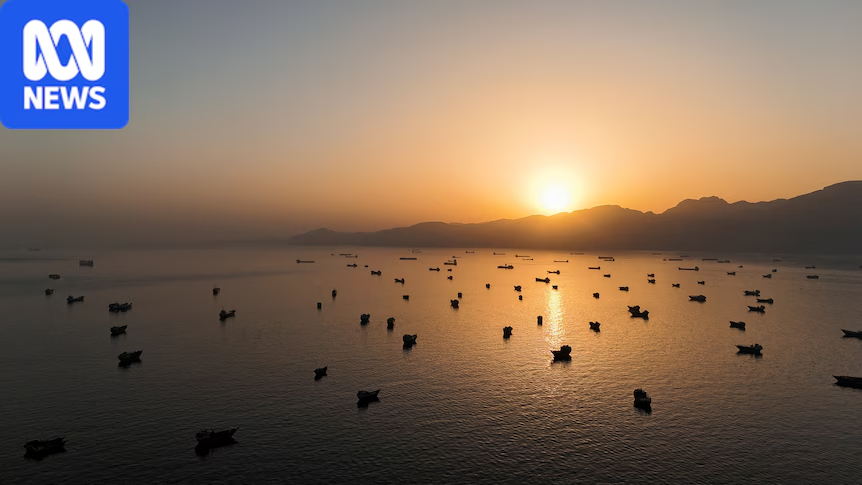
Commercial shipping in the vital Middle Eastern waterway faces mounting peril as maritime authorities log multiple strikes on vessels navigating the chokepoint. The United Kingdom Maritime Trade Operations agency reported that recent attacks involving unknown projectiles resulted in two casualties among merchant crews. INTERCARGO identified one of the victims as a sailor aboard the Liberian-flagged bulk carrier Minoan Dynasty, who was killed in an attack. A separate vessel attempting to exit the channel sustained damage to its engine room and suffered another crew fatality during an incident, according to the United Kingdom Maritime Trade Operations Centre.
Vessel Attacks and Maritime Casualties in the Strait
Those incidents follow months of disruptions in the waterway, which historically carried roughly one-fifth of the world’s petroleum supply. According to United Nations figures cited by ABC News, 17 seafarers have died in the waterway over the course of the six-month conflict, while vessel transit numbers have plummeted by roughly 90 per cent. To reduce their visibility to hostile actors, many commercial operators now travel with their navigation and identification systems disabled.
“Seafarers are civilians and must never become targets or collateral victims of geopolitical conflicts,”
INTERCARGO
INTERCARGO further stated that one seafarer lost is one too many.
Stalled Diplomacy and Contrasting Territorial Demands
The security crisis on the water mirrors a complete breakdown in diplomatic negotiations between Washington and Tehran. A previous 14-point memorandum of understanding and temporary ceasefire officially expired, with both governments accusing each other of violating the terms. Mohammad Baqer Qalibaf, Iran’s top negotiator, stated on state media that the passage will remain closed until the United States fulfills conditions from an interim June agreement, including lifting blockades, removing oil sanctions, unfreezing assets, and halting military threats.

Iranian Foreign Ministry spokesperson Esmail Baghaei noted that the two nations had reached an understanding
regarding a transit route map, but wider talks remain frozen. President Donald Trump disputed the existence of any active negotiations and insisted that the waterway is currently managed under American control.

“The Hormuz Strait is open and operating. All water mines have been removed or detonated. There are no talks or conversations going on, or scheduled with the Islamic Republic of Iran. The Naval Blockage remains in full force and effect.”
President Donald Trump
President Trump further stated that he would not extend the expired ceasefire and floated plans to declare the Strait of Hormuz a United States territory after the war concludes. The diplomatic friction also strained relations with regional neighbors; during a Fox News interview, President Trump issued a stark warning regarding Oman’s diplomatic outreach, stating, If Oman gets in the way, we’ll bomb the s‑‑‑ out of them
as quoted by Yahoo News Australia.
Spiking Energy Markets and Marine Underwriting Pressures
The convergence of naval blockades, mine threats, and vessel attacks has severely restricted petroleum flows, driving energy markets upward. Brent crude futures climbed over 3 per cent across a single week to reach $91.38 per barrel by late Friday afternoon, marking a three-week high.
The International Energy Agency reported that last year, 34 per cent of the world’s crude oil moved through the narrow channel, which spans only about 20 miles across at its tightest point. While Saudi Aramco recently resumed loading operations from inside the gulf with an eye toward Asian markets in Singapore and Malaysia, commercial reluctance remains high. Matthew Kroenig, senior director of the Scowcroft Center for Strategy and Security at the Atlantic Council, observed that many shippers view transiting the zone as too dangerous even with naval escorts, according to NPR reporting.
Marine insurers have adjusted by canceling specific war risk coverages for vulnerable vessels. However, Lloyd’s of London Chairman Sir Charles Roxburgh issued a reassuring statement expressing confidence in our marine insurance market, which has remained open and continues to support international trade and shipping during this period of heightened risk,
pledging cooperation with U.S. and British authorities to maintain maritime trade stability.
Ещё по этой теме

