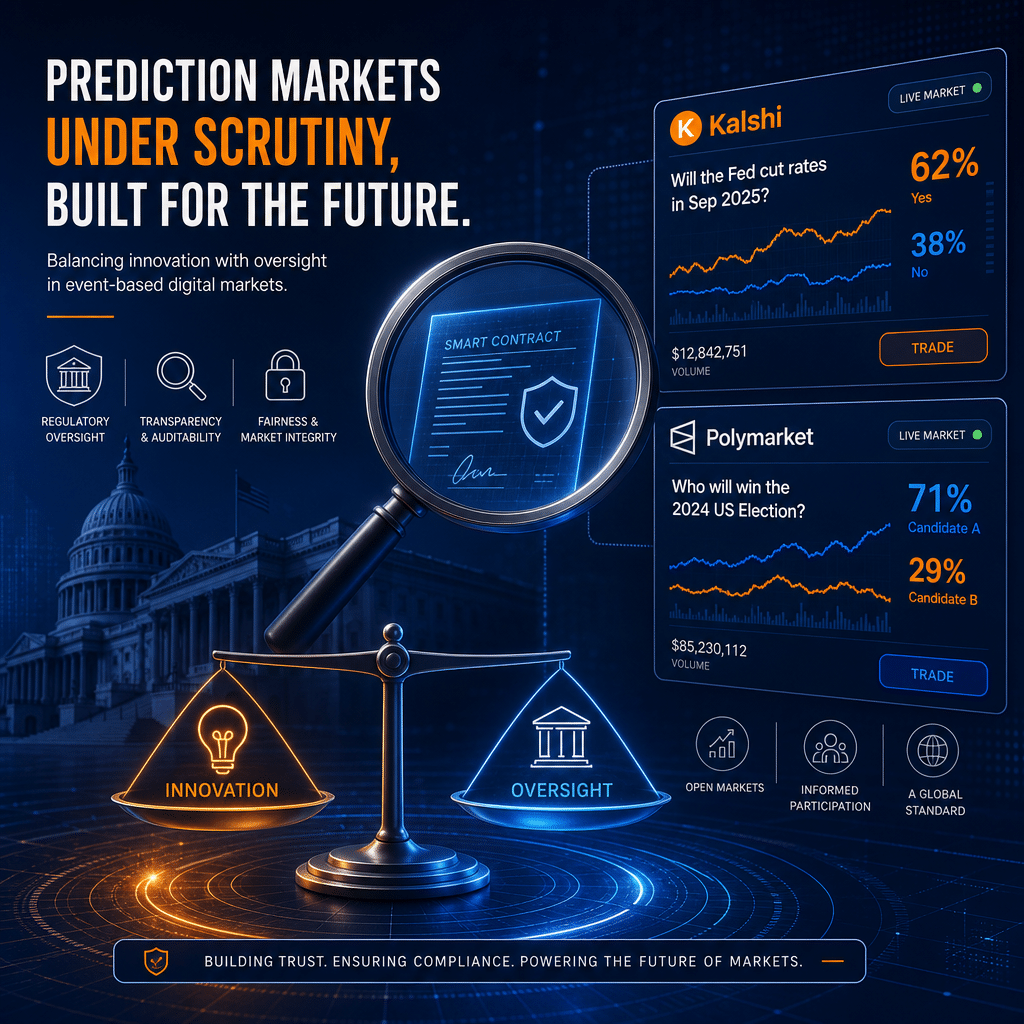
Prediction markets are surging, driven by legal shifts and media partnerships. However, academic research shows that professional traders capture most profits, leaving retail participants facing steeper competition, tighter spreads, and harder conditions to beat.
Prediction markets have exploded from niche academic experiments into mainstream financial platforms, handling billions of dollars in event contracts on everything from political outcomes to macroeconomic indicators. Platforms like Kalshi and Polymarket now allow everyday users to trade bets on future events using a smartphone or laptop, fueled by recent court decisions and corporate expansions. But as the market scales, the underlying dynamics are shifting rapidly in favor of institutional liquidity providers and sophisticated algorithmic traders.
Who Captures the Profits in $13.76 Billion of Polymarket Trades
An academic working paper analyzing $13.76 billion of Polymarket trades reveals a stark division among participants. Roughly 27% of dollar profits were captured by a tiny fraction of accounts—just 3%—identified as persistently skilled. These successful traders repeatedly moved market prices toward actual outcomes by reacting faster to public news, arbitraging inconsistent pricing across related contracts, and exploiting behavioral errors made by casual bettors.
Yale economist and co-author Theis Jensen noted that as institutional players flood the space, increased competition forces prices to correct much faster. If you have a lot of skilled people, then they compete, and in doing so, they make prices more correct,
Jensen explained. Consequently, trading strategies relying on wide spreads and straightforward arbitrage find it increasingly difficult to turn a profit.
“It’s harder as markets get more efficient and spreads get tighter. It’s going to be harder to find these mispricing and arbitrage opportunities.”
Julie Hoover, Bank of America equity research analyst, via CNBC
As more capital chases the same discrepancies, Jensen expects the proportion of traders maintaining a distinct edge to shrink from 3% to potentially below 1%, suggesting that only top-tier hedge funds will consistently beat the markets. Nevertheless, smaller skilled participants can still carve out an advantage in niche contracts where specialized expertise allows them to act as market makers, according to Bank of America equity research analyst Julie Hoover.
Macroeconomic Forecasting Outperforms Traditional Benchmarks
While individual speculators face tougher odds, prediction markets are earning institutional respect for their data accuracy.
Counterintuitively, retail traders without a persistent edge may benefit from this professionalization. Better-calibrated prices reduce the risk of overpaying on flawed pricing errors, effectively making the platform more of a fair gamble where prices closely reflect underlying risks.
Regulatory Fractures and the Global Clash Over Gambling Definitions
While federal regulators and platforms push for growth, the regulatory landscape remains deeply fractured. In Europe, most nations categorize prediction markets as gambling, leading to outright bans or geoblocks on Kalshi and Polymarket. In the United States, however, the situation involves high-stakes jurisdictional disputes.
Over a dozen U.S. states have filed lawsuits against prediction platforms, arguing that the activity constitutes illegal gambling. Arizona even filed a criminal case against Kalshi. Meanwhile, the Commodity Futures Trading Commission (CFTC) has stepped in to defend the platforms and preempt state authority. Brian J. Gaines, a professor of political science at the University of Illinois Urbana-Champaign, noted that modern political betting has expanded dramatically since its roots in late-1980s academic futures markets, creating vast enforcement hurdles for decades-old regulatory frameworks.
Compounding the regulatory tension, Reuters reported that the CFTC is preparing new rules for prediction markets following scrutiny over well-timed trades ahead of major political policy surprises. These proposed rules would reportedly address sports-related contracts while barring contracts tied to war, terrorism, or assassinations as contrary to the public interest. Donald Trump has insisted that the CFTC maintain exclusive authority over the sector, adding further political weight to the ongoing federal-state tug-of-war.
Newsroom Dilemmas and the Ethics of Paid Sourcing
The boom in prediction markets has also forced major media organizations to confront ethical dilemmas regarding their commercial relationships with betting platforms. Subramaniam Vincent, director of journalism and media ethics at the Markkula Center for Applied Ethics at Santa Clara University, pointed out that news outlets increasingly incorporate prediction odds into election coverage alongside traditional polls.

Several mainstream news organizations have partnered with Kalshi and Polymarket, displaying betting data tickers on screens or utilizing their forecasts in exchange for payments. Vincent described these arrangements as paid sourcing
and brand placement designed to legitimize betting products. Simultaneously, internal newsroom conflicts have emerged over journalists trading on private knowledge before stories are published, prompting outlets like ProPublica to bar staff from participating in prediction markets entirely.
Читайте также

