
President William Ruto announced that Nairobi will host the second Africa Clean Cooking Summit on January 27 and 28, 2027, as Kenya unveiled a $600 million investment opportunity to expand clean cooking access across schools, healthcare facilities, and correctional services during the United Nations General Assembly in New York.
Nearly one billion people across the African continent still lack access to clean cooking, forcing families to rely on wood, charcoal, and other biomass fuels that drive indoor air pollution and deforestation. The daily burden disproportionately impacts women and children, who spend hours gathering fuel while facing smoke exposure that cuts into education and economic opportunity. Financial institutions and government leaders pressed to treat clean cooking as essential energy infrastructure rather than a secondary household issue during high-level meetings on September 22, 2026, at the 81st UN General Assembly.
Nairobi Prepares for the 2027 Clean Cooking Summit
Kenya, Norway, and the United States will co-host the upcoming summit in Nairobi, following the inaugural event held in 2024 that generated $2.2 billion in commitments from governments and the private sector. President Ruto urged international partners and state leaders to arrive in Nairobi with actionable measures rather than broad declarations.
When we meet in Nairobi, let each one of us come prepared to point to one concrete step.
President William Ruto, via The Star
The International Energy Agency reported that over 120 new clean cooking policies have been introduced since the Paris gathering, with access expanding roughly 30 percent faster than the prior five-year average. More than one-third of the $2.2 billion pledged in Paris has reached projects across 28 African countries, supplemented by an additional $900 million in commitments secured by July.
Institutional Clean Cooking Investment Pack and Financing Gaps
To help bridge the continent’s estimated $2 billion annual investment requirement, Kenya launched its Institutional Clean Cooking Investment Pack. The initiative identifies a US$600 million investment opportunity targeted at public institutions including schools, hospitals, and correctional facilities.

African Development Bank Group Senior Vice-President Marie-Laure Akin-Olugbade emphasized that cooking methods dictate broader societal outcomes. How a family cooks affects health, forests, productivity, gender equality and the daily lives of millions of women and children in Africa,
Mrs. Olugbade noted, calling the shift central to human dignity and climate action.
Following a $2 billion ten-year pledge made after the 2024 summit, the African Development Bank has directed approximately $135 million into sector projects. These include biogas and electric cooking initiatives in Uganda, integrated electrification programs in Tanzania, and results-based financing reaching 100,000 households and 300 institutions in Rwanda.
Policy Alignment Across Mission 300 Energy Compacts
Clean cooking targets have now been integrated into all 36 National Energy Compacts adopted under Mission 300, the joint World Bank and African Development Bank initiative working to bring electricity to 300 million Africans by 2030. Policymakers face the complex task of matching diverse local needs with appropriate technologies, ranging from liquefied petroleum gas and electric appliances to biogas, bioethanol, and briquettes.
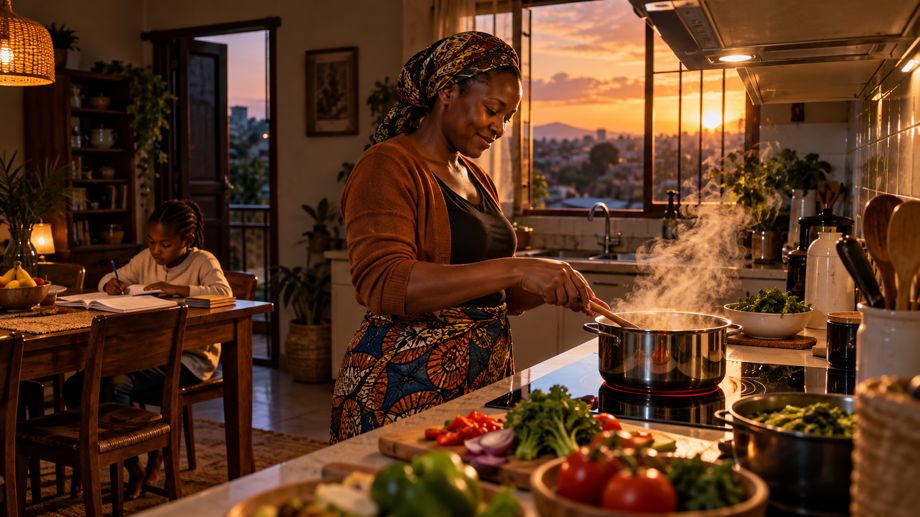
President Ruto cautioned that market frameworks must account for the millions whose livelihoods depend on charcoal and firewood production. Economic transitions must incorporate alternative employment, local-currency financing, and risk guarantees to ensure long-term adoption without leaving vulnerable workers behind.
Продолжение темы

