
Following a 7.4 magnitude earthquake that struck western Colombia on Monday, search and rescue operations entered their third day on Wednesday. The disaster has killed over 200 people, and severely tested the government of President Abelardo de la Espriella as international aid begins to arrive.
The powerful tremor struck Colombia’s coffee-growing region on Monday, triggering widespread structural collapses across major urban centers including Cali, Pereira, Manizales, and Quibdo. It is the strongest earthquake to hit the country in more than a decade, hurling communities into a state of national disaster as world leaders offered aid and assistance.
Casualties and Toll on the Ground in Western Cities
Government figures and civilian tallies paint a picture of mounting devastation across the affected provinces. By Tuesday, President Abelardo de la Espriella reported that the 7.4 magnitude earthquake had killed at least 181 people and left 2,595 more injured in the west of the country. A CNN count based on reports from officials placed the death toll higher, surpassing 200 fatalities as rescue teams pushed past the crucial 48-to-72-hour window.
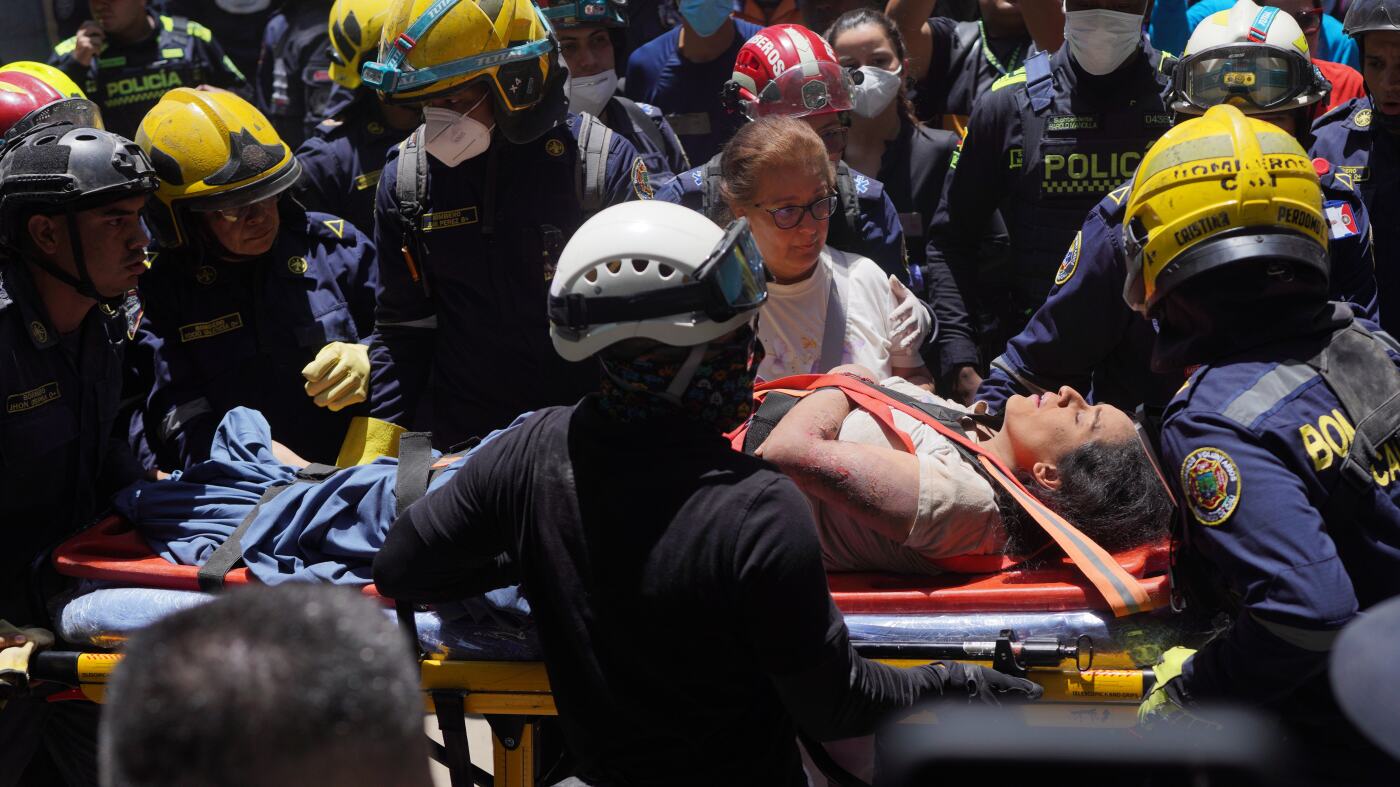
President de la Espriella stated that at least 195 people remained missing, though civilian-run databases put that missing count closer to 4,000. In Cali, a woman was pulled alive from under a mountain of rubble on Tuesday to cheers as firemen carried her out on a stretcher following a complex, multinational rescue operation. In Pereira, a CNN team observed rescue workers and volunteers forming a human chain to clear debris from apartment buildings.
A Whispered Voice Leads to a Dramatic Infant Rescue in Cali
Amid the grim search for survivors, small moments of success have broken through the devastation. When the tremor struck, Brian Osorio Zuluaga ran out of his office in Cali and rushed home on his motorbike, stopping at the sight of a collapsed five-story residential building at La Torres del Limonar that covered an entire block.
Osorio approached the wreckage and shouted for survivors, eventually asking the gathered crowd for silence. A faint whisper rose from the debris. A man’s voice called out, saying he was trapped alongside an infant. Working with other bystanders, Osorio attempted to lift a massive concrete slab blocking their path.
Volunteers held the heavy slab aloft while others cleared a path. Osorio recounted that the baby boy’s head initially looked purplish from a lack of oxygen, but his color returned as the rubble was cleared and he began to breathe. Osorio handed the infant to a police officer who took him to an ambulance before returning to help free the half-trapped man lying nearby under a concrete plank.
Isolation and Humanitarian Strain in Chocó
While urban centers like Cali and Pereira see coordinated rescue efforts, the epicenter in Chocó province tells a starkly different story. Victor Chamapuro, leader of the Wounaan Indigenous Reserve “Buenavista” in Chocó’s Litoral del San Juan, told reporters that help has yet to reach Colombia’s poorest region.
Victor Chamapuro, the leader of the Wounaan Indigenous Reserve “Buenavista,” said that all our houses are on the ground.
He questioned where his community would sleep now, adding, We have to be alert now, we’re sleeping outside.
Chamapuro called on authorities to send urgent food and medicine, noting that one community member was injured. The Buenavista reserve is accessible only by a five-hour boat journey from the port of Buenaventura on Colombia’s Pacific coast. Video footage from the reserve showed flattened timber and corrugated iron structures.
The geographic isolation compounds preexisting challenges in the region. Giovanni Rizzo, Colombia director for the Norwegian Refugee Council, noted that the earthquake compounds an already severe humanitarian situation driven by deep poverty and decades of civil conflict. However, María José Torres, the U.N. resident coordinator in Colombia, pointed out that the 2016 peace accord between rebels and the government has left aid organizations already stationed in conflict-torn centers like Chocó, increasing their ability to reach affected populations.
International Aid Responses and Government Mobilization
The natural disaster has presented an immediate administrative test for Colombia’s President Abelardo de la Espriella. As domestic emergency services push through the final hours of the critical survival window, support from foreign governments and nonprofits continues to arrive.
The European Union has mobilized its Copernicus satellite service and provided funding for the emergency response, according to the bloc’s foreign policy chief, Kaja Kallas. Meanwhile, the United States has offered over $15 million in aid.
Regional neighbors have also stepped up deployment plans. The president of Mexico indicated readiness to dispatch hundreds of search and health workers alongside tons of medical supplies. Salvadoran President Nayib Bukele announced via social media that his government would send two planes carrying 100 tons of aid in the coming days.
Продолжение темы

