
Amtrak has reopened East River Tunnel Line 2 after a yearlong modernization project to repair severe saltwater damage from Superstorm Sandy. The 116-year-old rail link carries hundreds of daily trains between Queens and Penn Station in Manhattan, marking a crucial halfway milestone for regional commuters.
East River Tunnel Line 2 Reopens After Major Overhaul
Amtrak officials marked a major milestone on Monday at a reopening celebration at Penn Station, restoring passenger service to one of the region’s most critical rail arteries.
The rehabilitation project stripped Line 2 down to its bare concrete liner. Crews completely rebuilt the track beds, drainage systems, bench walls, cables, and signal equipment to reverse deterioration.
“They installed new track, drainage, power, communications, state-of-the-art life safety systems, and other key infrastructure throughout the three-mile tunnel, all in just over a year.”
Byl Herrmann, Amtrak Interim President
Over a Decade of Corrosion Following Superstorm Sandy
Lines 1 and 2 of the East River Tunnel system originally opened in 1910, the same year as the original Penn Station. More than a century later, Superstorm Sandy inundated both tubes with millions of gallons of corrosive saltwater.

The residual salt left behind caused long-term structural corrosion that contributed to train disruptions over the ensuing decade. Repairs were delayed in part because of conflict over responsibility between Amtrak, which owns the tunnels, and the Metropolitan Transportation Authority, the parent agency of the heavy-user LIRR.
Federal funding ultimately unlocked the stalled project. Senator Chuck Schumer helped secure the financial package, noting federal backing for the undertaking.
“After Superstorm Sandy flooded these tunnels with 14 million gallons of corrosive salt water, I was proud to fight for and deliver the $1.3 billion to fix it.”
Chuck Schumer, U.S. Senator
The total cost for rehabilitating both damaged tubes is approximately $1.6 billion. Roughly $1.3 billion of that total comes from federal grants awarded by the Federal Railroad Administration through the bipartisan infrastructure package signed into law in 2021, with the remainder funded by Amtrak, the MTA, and New Jersey Transit.
Commuter Friction and the Debate Over Full Closures
While officials celebrated the reopening, the project exposed deep friction between national rail operators and local transit leadership over construction methods. The full closure of Line 2 reduced LIRR peak-hour service capacity by 20%, creating crowding issues for daily commuters heading into Manhattan.
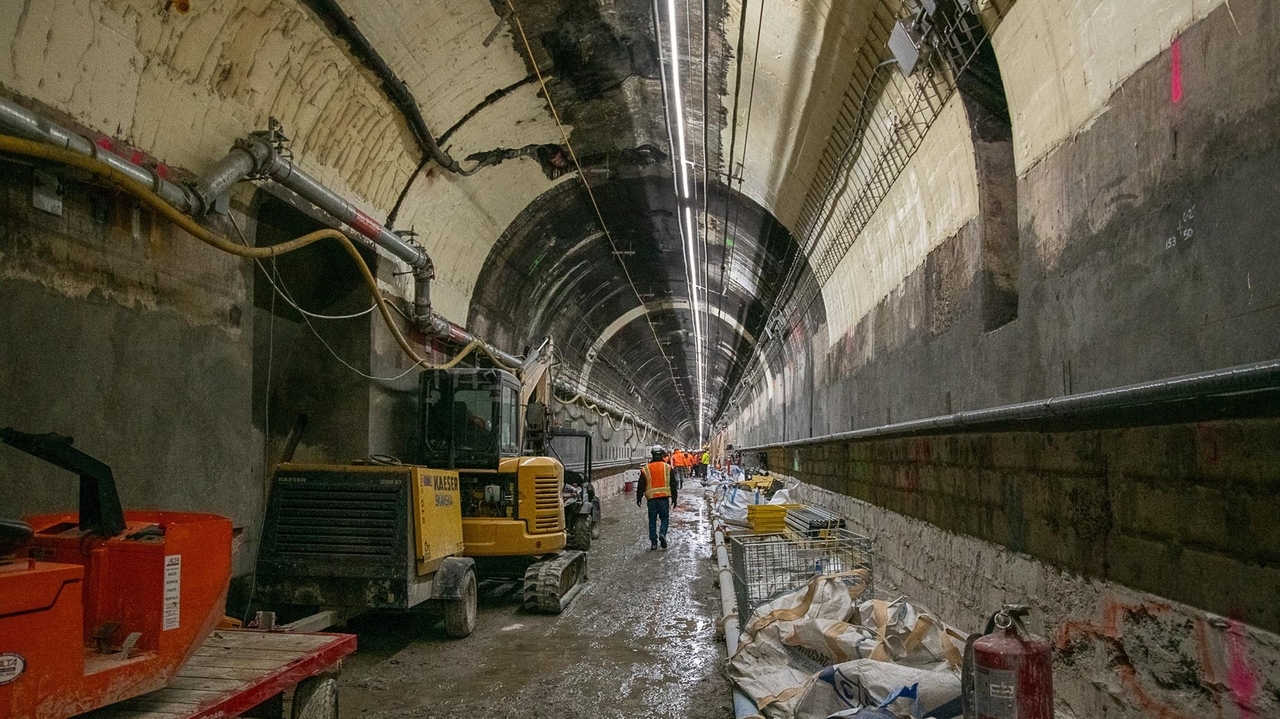
MTA Chairman Janno Lieber pulled no punches during the celebratory press conference, explaining that local transit leadership had previously urged Amtrak to restrict heavy construction to nights and weekends to protect passenger schedules.
“People say, ‘You’re pretty militant about protecting your customers. You’re pretty tough on Amtrak.’ Guilty as charged.”
Janno Lieber, MTA Chairman
Lieber added that the reduction in tunnel capacity forced the LIRR to scale back operations, amplifying rider frustration when separate incidents—including a May track fire and an LIRR train striking debris—disrupted operations in the remaining active tubes.
Amtrak defended the complete shutdown, maintaining it was the only viable way to execute the repairs safely and efficiently. Warren LeBeau, Amtrak’s vice president of infrastructure project delivery, noted that restricting work exclusively to off-peak hours would have added years to the timeline and resulted in significantly more impact to riders.
Next Phase Set to Begin on Line 1
With Line 2 operational again, Amtrak is preparing to shift its focus to the second Sandy-damaged tube. Work on Line 1 is scheduled to begin this fall, requiring a full closure expected to last roughly 13 months and conclude by the end of 2027.
Amtrak officials stated that the newly renovated tunnels incorporate modern safety technology, enhanced lighting systems for better operator visibility, and widened drainage systems designed to move water out more efficiently.
Commuters can expect the second phase to bring similar scheduling adjustments, though regional transit authorities plan to monitor the upcoming work closely. Lieber emphasized that the MTA intends to remain an active partner to secure safety and risk-reduction measures for future stages.
Продолжение темы

