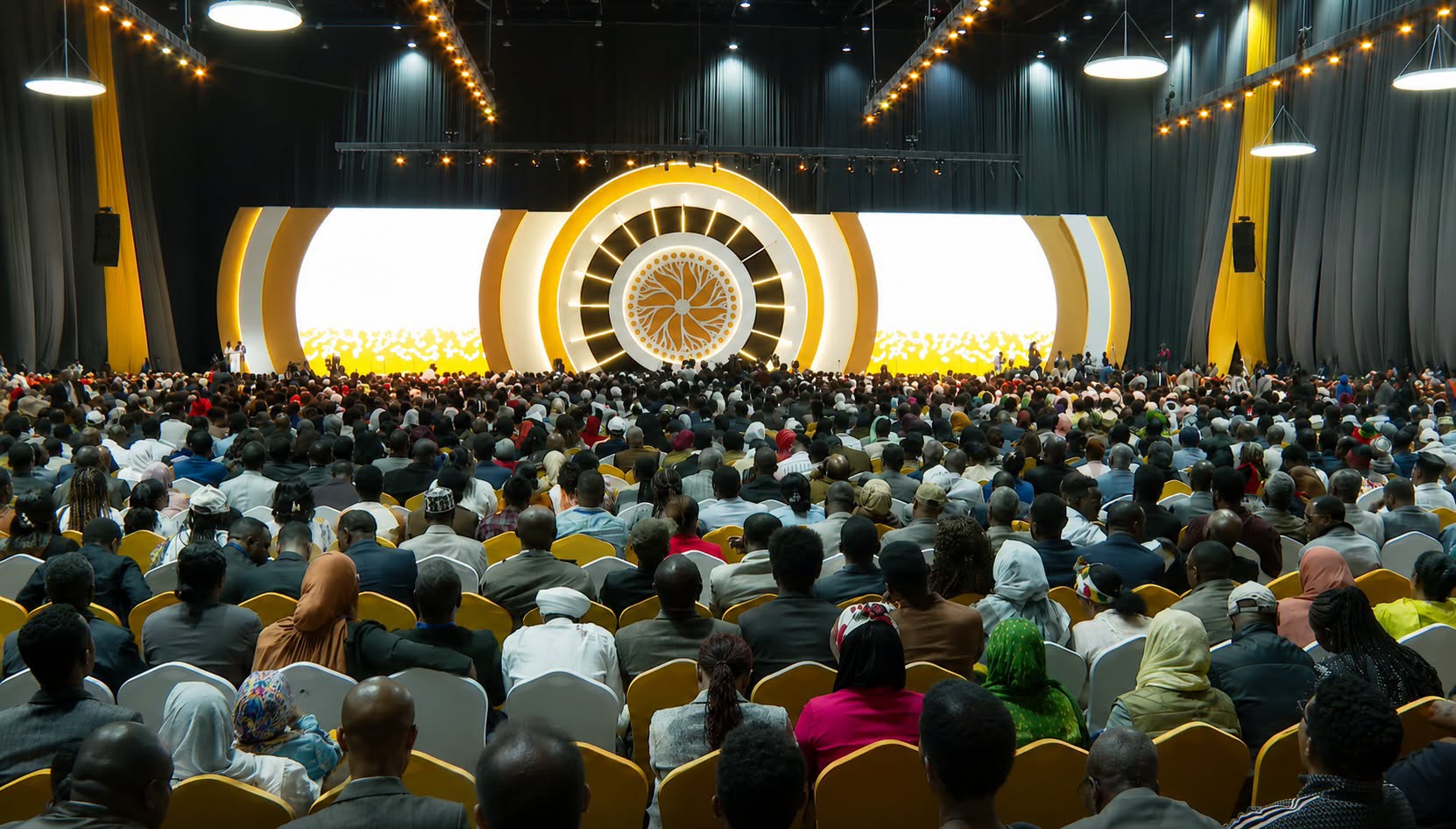
Ethiopia concluded a landmark National Dialogue Conference on Saturday after nearly 4,000 Ethiopians from diverse backgrounds spent 40 days deliberating on some of the country’s most consequential national questions, producing approximately 400 recommendations aimed at addressing longstanding political, social and institutional challenges and laying the foundation for a more peaceful, inclusive and stable country, the Ethiopian News Agency reported.
The closing ceremony at the Addis Ababa International Convention Center began with the Ethiopian national anthem, followed by prayers from religious leaders. Former and current presidents, senior government officials, religious leaders, national figures and invited guests attended the session. The conference brought together political representatives, civil society groups, religious leaders, elders, women, young people, farmers, pastoralists, scholars, former combatants and members of the Ethiopian diaspora. The forum, organised by the Ethiopian National Dialogue Commission, officially commenced on July 15, 2026, with participants spending about 40 days deliberating on some of the most consequential questions facing Ethiopia.
Delegates discussed eight major agendas: nation-building; the structure of the state and political and electoral systems; the status of Addis Ababa and Dire Dawa; religious affairs, historical grievances and reconciliation; institution-building, the rule of law and human rights; socio-economic challenges affecting farmers and pastoralists; corruption and good governance; and peace building and conflict resolution.
To support the process, the Ethiopian National Dialogue Commission (ENDC) deployed about 160 facilitators and 156 rapporteurs to guide and document the deliberations. Approximately 80 specialists from universities, research institutions and other organisations also provided technical support, while more than 50 observers representing civil society organisations, professional associations and human rights institutions monitored the conference.
Ethiopia President Taye Atske Selassie
Ethiopia President Taye Atske Selassie described the conference as a milestone that reinforced Ethiopia’s shared aspirations and national unity. He said it had created an environment in which competing perspectives could be discussed constructively and national disagreements addressed through peaceful engagement.
Former Nigerian President Olusegun Obasanjo, the African Union’s High Representative for the Horn of Africa, described the conference as a historic undertaking and an example for other African countries. Obasanjo said there was no substitute for dialogue and peace and called for the recommendations to be used to address outstanding national issues and strengthen unity, stability, good governance and sustainable development.
Former Kenyan President Uhuru Kenyatta
Former Kenyan President Uhuru Kenyatta praised Ethiopia’s rich history, cultural diversity and resilience, describing the country as far more than a modern African state but an ancient civilisation whose heritage remains a source of strength. Speaking during the closing ceremony of the Ethiopian National Dialogue Conference at the Addis International Convention Centre, Uhuru said his long association with Ethiopia had given him a unique appreciation of the country and its people.
I stand before you as a friend of Ethiopia, a country that has become to me a friend and a second home,
Uhuru said.

He said friends sometimes have the advantage of looking at a country from outside and reminding its people of extraordinary things they may fail to notice because they encounter them every day. Kenyatta said the conclusion of the conference should be considered the beginning of a broader national journey towards reconciliation, inclusion and peace. He urged Ethiopians to extend the dialogue to people and organisations that were not represented at the conference, saying sustainable peace required broader participation. He also said Ethiopia’s diversity should be treated as a national strength rather than a source of division.
Reflecting on his travels across Ethiopia, the retired President highlighted the historical and cultural significance of different regions. Allow me in humility to travel across this country, to Tigray, one of the greatest civilisations in Africa,
Uhuru said, before turning to the central parts of the country to highlight the Oromo heartland and the vast landscapes inhabited by the Oromo people and the Gadaa system, as well as communities in southern Ethiopia pointing to their traditions of enterprise, commerce and community organisation.
Ethiopian National Dialogue Commission Deputy Chief Commissioner Hirut Gebre Selassie
Ethiopian National Dialogue Commission (ENDC) Deputy Chief Commissioner Hirut Gebre Selassie said the process had established a foundation for addressing deep-rooted grievances and political differences through consultation rather than violence.
The dialogue represents one of Ethiopia’s most ambitious efforts to address disagreements over governance, national identity, federal arrangements, historical grievances and political representation through nationwide consultation. The process has faced criticism from some opposition parties and political groups over its inclusiveness and the absence of several major political and armed actors.
По теме

