
Singapore must ensure that economic support for workers begins before disruptions take hold, Deputy Prime Minister Gan Kim Yong said on Thursday. Speaking at the Economic Society of Singapore’s 70th anniversary dinner at Orchard Hotel Singapore, Mr Gan emphasized that good jobs should serve as a core component of economic planning rather than a mere afterthought.
Support Must Begin Before Workers Are Affected, Says DPM Gan Kim Yong
The event drew notable attendees including Emeritus Senior Minister Goh Chok Tong, former DPM and National Research Foundation chairman Heng Swee Keat, and Minister for Transport and Second Minister for Finance Jeffrey Siow. Mr Gan’s remarks coincided with ongoing parliamentary discussions regarding artificial intelligence-led growth and a motion moved by the Workers’ Party calling for an inclusive economy. Parliament subsequently passed an amended motion aimed at fostering an inclusive economy that accommodates both local and global enterprises.
Navigating the Artificial Intelligence Shift and Job Creation
Addressing the technological shift, Mr Gan noted that the country cannot automatically assume economic growth will generate the same volume of jobs as in the past. Dr Tan See Leng, Minister for Trade and Industry (Energy and Industry), echoed similar sentiments during a dialogue session on Wednesday, pointing out that automation and AI might allow companies to increase production with fewer personnel.
Despite these shifts, Mr Gan advised against panic or complacency. This is not likely to lead to immediate, economy-wide job losses,
he said, adding that new tasks and roles will emerge as existing jobs evolve or shrink. To manage the transition effectively, Mr Gan stressed the need to identify roles exposed to AI early and establish effective career bridges combining targeted training, guidance, job matching, and placement.
Broadening Strategies Beyond Artificial Intelligence Engineering
Highlighting that not every worker should or will become an AI engineer, Mr Gan pointed to essential sectors such as care, allied health, early childhood education, skilled trades, and essential services. Technology can support these fields, he noted, but cannot easily replace roles relying on human interaction, judgment, trust, and dexterity.
The task is not merely to preserve these jobs as they are,
Mr Gan said. It is to raise their productivity, improve their design, strengthen progression and support better wages.
Furthermore, he underlined that productive work offers individuals agency, dignity, social recognition, and confidence beyond financial compensation.
Collaborative Systems and Global Economic Relevance
Mr Gan asserted that adaptability cannot be left solely to individual workers. Employers, training institutions, unions, and the government must collaborate closely to ensure labour-market information is accurate and training connects directly to real jobs.
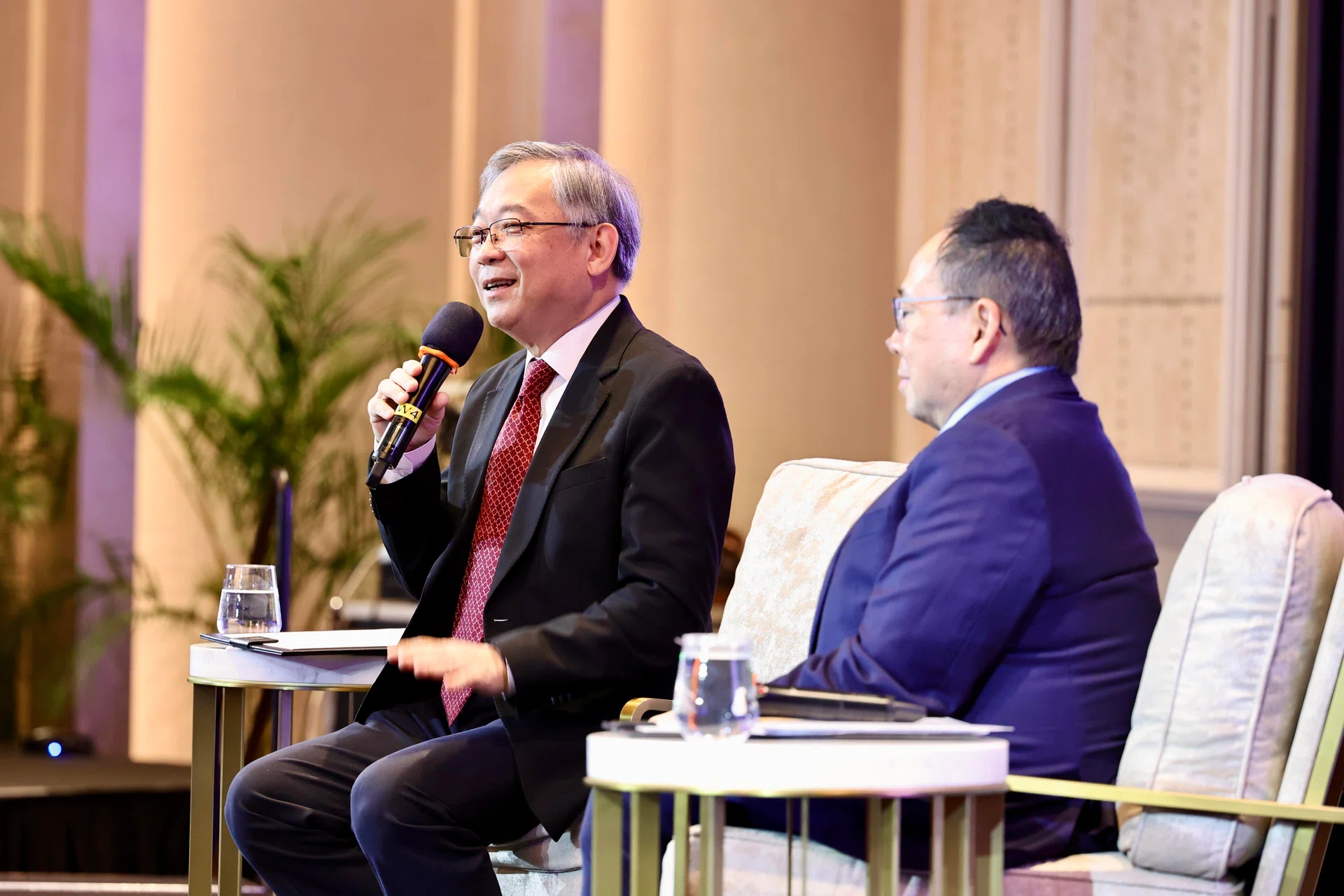
Learning must remain closely connected to work, and support must begin before workers are affected,
Mr Gan stated.
Beyond domestic workforce measures, Mr Gan addressed Singapore’s position in an increasingly fragmented global economy where trade and investment do not always follow efficient routes. Reliability, security, and strategic alignment now outweigh mere convenience. Consequently, Singapore must transition from simply being open to remaining relevant, evolving from a transit hub for goods and capital into a place where those flows are governed, managed, and decided.
Читайте также

