
The the-star.co.ke successfully blasted off on August 30 from the Kennedy Space Center in Florida, carried into space by a SpaceX Falcon Heavy rocket. Built with a budget of $4.3 billion, the observatory is headed toward an orbiting point roughly one million miles from Earth, beginning with a 100-day journey to reach its vantage point. The telescope is named after physicist Nancy Grace Roman, who served as NASA’s first chief astronomer in the 1960s and its first female executive, and who was instrumental in getting the Hubble Space Telescope approved by the U.S. Congress.
Launch and Mission Objectives of the Nancy Grace Roman Space Telescope
The mission is designed to explore dark energy, black holes, and other cosmic mysteries. According to NASA administrator Nicky Fox, the telescope will capture vast panoramic views with a field of vision at least 100 times larger than that of Hubble, allowing it to discover tens of thousands or potentially 100,000 new exoplanets. The observatory has a five-year primary lifespan with a goal to operate for 10 years, helping scientists investigate dark energy and dark matter, map billions of galaxies, and study objects from the solar system to the edge of the observable universe.
Historical Naming Conventions and Real-Life Women in Space Missions
The Nancy Grace Roman Space Telescope stands out as part of a very small group of major missions named after real-life women. Historically, NASA’s Great Observatories
launched between 1990 and 2003 were named exclusively after U.S. male astronomers and physicists, including the Hubble Space Telescope, the Compton Gamma-Ray Observatory, the Chandra X-ray Observatory, and the Spitzer Space Telescope. Furthermore, the U.S. space program has frequently relied on mythological names for human spaceflight programs such as Mercury, Gemini, and Apollo.
Relatively few spacecraft have borne female names, and most of those drew from mythology, such as NASA’s Europa Clipper and China’s Chang’e moon probes, or used female names not attached to particular individuals, such as NASA’s Clementine moon mission and the European Space Agency’s LISA. Notable exceptions honoring real-life figures include Sojourner, the mini-rover on NASA’s Mars Pathfinder lander named after Civil War-era abolitionist Sojourner Truth, and ESA’s Rosalind Franklin rover, named after the British scientist who contributed to discovering the structure of DNA.
Advanced Hardware and Industrial Milestones in Orbit
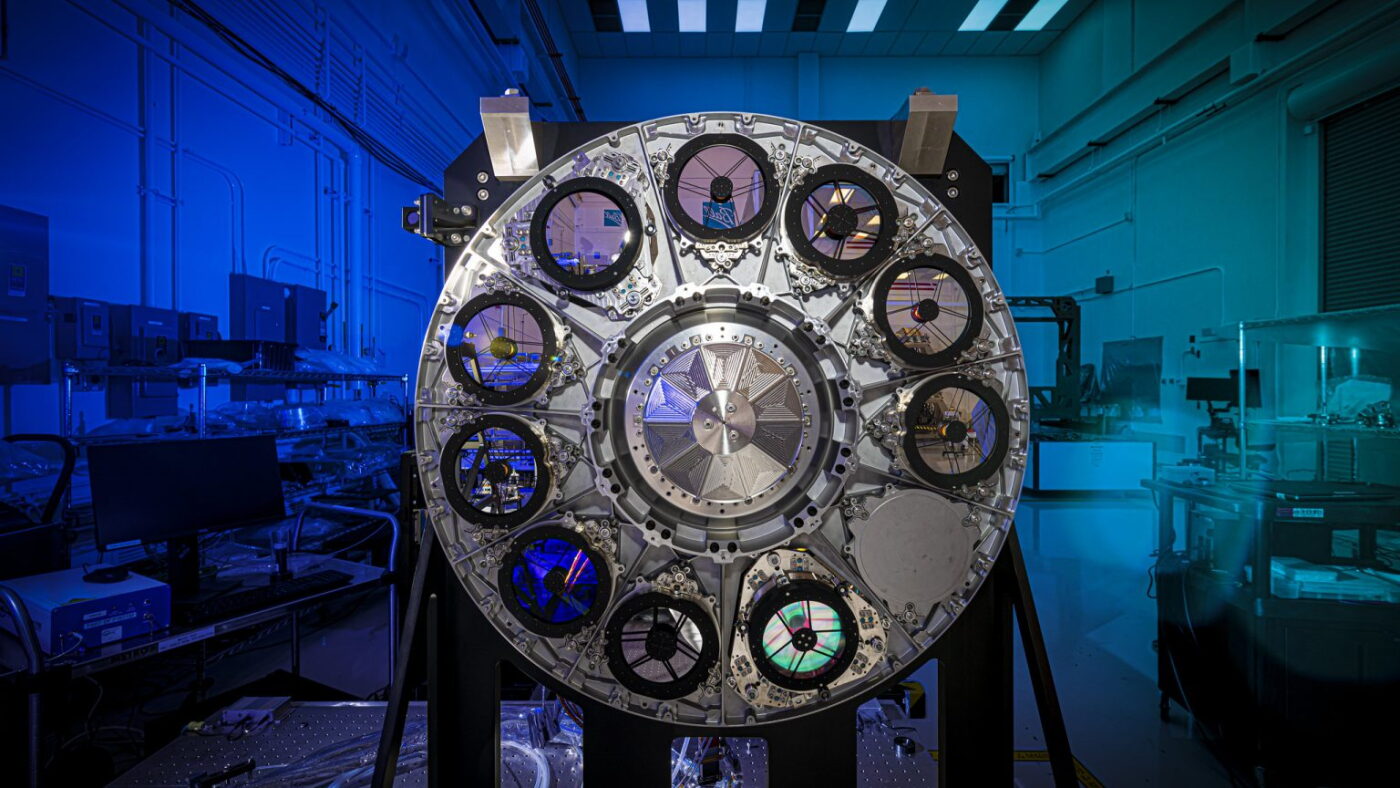
The launch of the Roman Space Telescope also marked a major industry milestone for satnews.com, a business unit of Teledyne Technologies Incorporated, which announced that it had surpassed 1,000 space-qualified scientific imaging sensors operating in orbit. Teledyne supplied the primary detector assemblies for both scientific instruments aboard the Roman observatory. This includes the Wide Field Instrument, which features 18 H4RG-10 infrared detector arrays forming a mosaic of more than 300 million pixels to establish the largest infrared focal plane flown in space, and the Coronagraph Instrument, which integrates three CCD311-20 electron-multiplying charge-coupled device detectors to suppress host-star glare.

The origins of the Roman observatory trace back about 15 years when NASA planned a telescope to search for Type 1A supernovas to study dark energy. During development, the National Reconnaissance Office reached out to offer an unused satellite sitting in a hangar, which NASA modified to become the new observatory. Project scientist Julie McEnery noted that while Roman shares the sensitivity and sharpness of vision of the Hubble Space Telescope, its design allows it to complete a one-month survey of all the stars in the Milky Way galaxy that would take about a century using Hubble.
По теме

