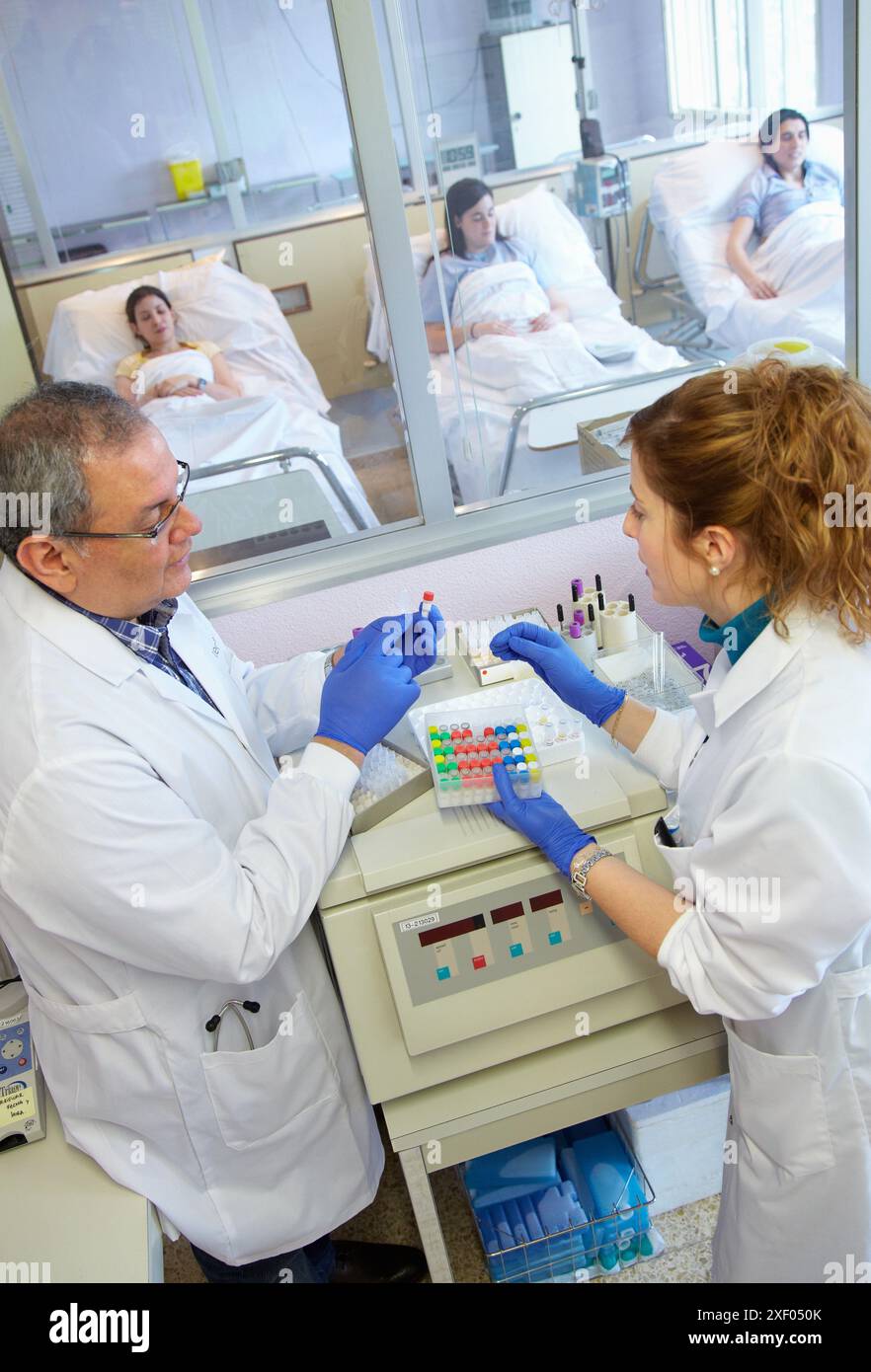
An international research team has begun patient enrollment in a randomized, controlled clinical trial to test the safety and efficacy of multiple investigational Ebola therapies in the Democratic Republic of the Congo (DRC). The trial is currently operating at a treatment unit in the city of Beni, which is managed by the medical humanitarian organization ALIMA (The Alliance for International Medical Action).
Coordinated by the World Health Organization (WHO), the research consortium aims to compare mortality rates among patients receiving one of three investigational drugs against a control group receiving ZMapp, a monoclonal antibody cocktail developed by Mapp Biopharmaceutical, Inc. The trial is expanding from Beni to additional districts within the DRC.
Scope and Investigational Treatments
The trial is testing treatments that have previously been administered on an emergency basis under the WHO’s Monitored Emergency Use of Unregistered and Investigational Interventions (MEURI) framework. While these drugs have data from laboratory, animal, and human testing, none have been approved for treating Ebola virus disease (EVD). According to the DRC Health Ministry, the trial initially began with three treatments: remdesivir, mAb114, and ZMapp. A fourth experimental treatment, Regeneron’s REGN-EB3 antibody, may be included as the trial extends to other sites.
The specific treatments involve different medical requirements:
- ZMapp: Requires three infusions administered over several hours.
- Remdesivir: Requires regular analysis of the patient’s liver function.
Unlike compassionate use, where doctors select the medication, participants in this trial are assigned a treatment via a randomized lottery. All participants continue to receive standard supportive care, including pain management, electrolyte replacement, and the maintenance of blood pressure and oxygen status through oral or intravenous fluids.
Outbreak Context and Statistics
The DRC Ministry of Health declared the country’s 10th outbreak of EVD on Aug. 1, 2018. The virus has spread through the northeastern provinces of Ituri and North Kivu. As of Nov. 25, 2018, the ministry reported 419 confirmed and probable cases, resulting in 240 deaths. Of these case-patients, 61% have been female.

Recent data indicates continued transmission in villages and cities within North Kivu. Between Nov. 22 and Nov. 25, 33 new cases were reported, including 12 in Beni, 9 in Katwa, 6 in Butembo, 5 in Kalunguta, and one in Oicha. Health officials are also investigating 59 suspected cases. To date, 35,958 people have been vaccinated, including at least 10,110 frontline health workers.
Research Goals and Long-term Outlook
Officials emphasize that a randomized trial is necessary to obtain reliable, generalizable data, as emergency-use mechanisms cannot provide definitive evidence of efficacy. ZMapp is the only investigational treatment that had previously undergone a randomized, controlled efficacy trial during the 2014 to 2016 outbreak in West Africa and the U.S., though that study ended without definitive results because it failed to enroll enough participants as the outbreak waned.

Because data from the North Kivu outbreak alone may be insufficient to draw firm conclusions, the DRC Health Ministry stated the clinical trial could extend over five years and cover several outbreaks across multiple countries. The final number of participants will depend on patient willingness and the evolution of the epidemic.
WHO Director-General Tedros Adhanom Ghebreyesus described the trial as an important step towards finally finding an Ebola treatment that will save lives
. Dr. Oly Ilunga Kalenga, Congo’s Minister of Health, noted that the trials will build on the country’s unique expertise in combating the virus, which has struck the region frequently since 1976.
По теме

