
North Carolina’s open U.S. Senate race between Democrat Roy Cooper and Republican Michael Whatley has shifted toward affordability and economic pressure. Voters face rising living costs while navigating a campaign marked by a lack of scheduled debates, reliance on national media, and local political controversies.
The campaign to replace retiring Republican Sen. Thom Tillis is unfolding across a landscape where economic growth sits side by side with household financial strain. In Concord and surrounding Cabarrus County, major employers are expanding and billions in investments are pouring in, including from Eli Lilly. Unemployment is low and poverty is below the national rate, yet many residents report living paycheck to paycheck as grocery, rent, and gasoline prices climb.
That cost-of-living squeeze has turned affordability into a central political weapon for both campaigns. Former two-term Democratic Governor Roy Cooper has built his messaging around the slogan Make Stuff Cost Less,
telling voters at a Sept. 2 event that working families are hurting as prices skyrocket.
Economic Realities and Cabarrus County Growth
Cabarrus County serves as a prime test case for how economic pressures translate at the ballot box. Rachel Wagoner describes Concord, North Carolina, as the kind of place where she always envisioned raising her three children: safe, with good schools, a lively downtown and neighborhoods filled with families. But lately, that idyllic life has become harder to afford. Wagoner’s husband works outside of the home while she stays home with their children, but rising grocery and gasoline costs have squeezed the family’s budget enough that she has spent the past year considering going back to a paid job.
It gets harder and harder to make ends meet,
Wagoner told CNBC, adding that things her family once considered routine have now become a luxury, like eating out and coming and shopping downtown.
Everything feels big,
said Nichole Mattes, a mother in nearby Kannapolis who said rent, gasoline and groceries have left her living paycheck to paycheck. You can't be a single-income household right now. … It feels impossible.
Michael Whatley and the Affordability Counter-Attack
Republican nominee Michael Whatley has sought to deflect blame for current economic conditions back onto his Democratic opponent. Whatley, who served as chairman of the North Carolina GOP from 2019 until Trump elevated him in 2024 to lead the Republican National Committee—a post he stepped down from to pursue the Senate seat at the president’s urging—is trying to flip the script by arguing that Democrats like Cooper helped create today’s affordability headaches. The former Republican National Committee chair and a close ally of President Donald Trump has pointed to increases in energy, healthcare and housing costs during Cooper’s tenure and attacked his opposition to Republican tax cuts.
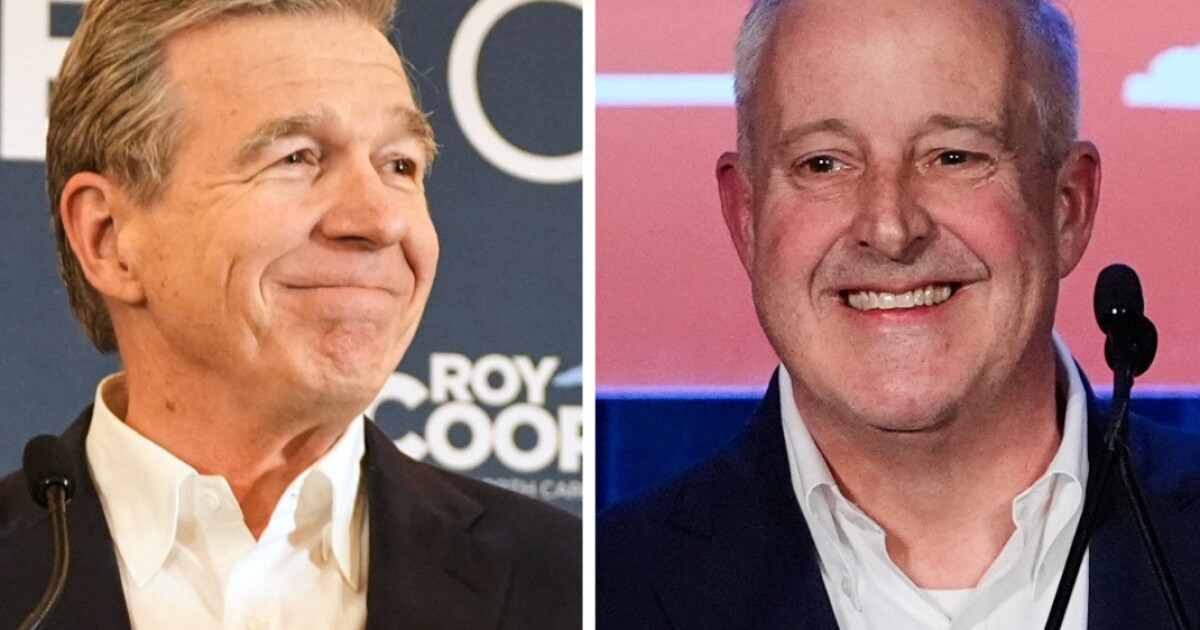
If Candidate Cooper wants to 'make stuff cost less,' he oughta look in the mirror,
Whatley campaign spokesman DJ Griffin said in a statement to CNBC.
It’s up to voters to choose who to blame, said Michael Bitzer, a political scientist at Catawba College in Salisbury, North Carolina, noting that Both candidates know people are dissatisfied.
Campaign Controversies and Debate Stalls
The race has also encountered controversy on the campaign trail with two months to go in a marquee Senate race that could help decide which party controls the chamber after the November elections. A pastor kicked off a recent campaign stop for Michael Whatley, the Republican nominee for Senate, with a prayer that asked God to bestow integrity and honesty
upon the event and to right wrongs hammered down on the conservative movement.
The man who delivered it, Pastor Daimon L. King, is a registered sex offender, twice sentenced to prison for convictions involving children, according to state and court records.

Whatley’s campaign declined to make him available for an interview. In a statement, campaign spokesman DJ Griffin said Whatley did not know King and the event was NOT planned nor organized by the Whatley campaign nor did the campaign invite any of the guests.
He emphasized that King had been invited by the hosts,
which he identified as the Craven County Republican Party. Officials with the county party could not be reached for comment. King’s prayer and Whatley’s association with the former GOP official Harvey L. West Jr., the other convicted sex offender, could prove particularly problematic as the Republican Senate candidate seeks to shore up support from hard-right conservatives, said Chris Cooper, a political science professor at Western Carolina University who is not related to the former governor.
Meanwhile, with less than two months to go in this year’s U.S. Senate campaign, former Gov. Roy Cooper and Republican Michael Whatley haven’t yet agreed to a debate. Past U.S. Senate races have brought three or more debates, although the 2022 campaign had just one debate on Spectrum News. Spectrum has invited Whatley and Cooper to a similar debate this year, along with the N.C. Association of Broadcasters, which has hosted past debates, and WUNC News, which partnered with the UNC School of Journalism and Media to invite the candidates to debate.
So far, none of those invitations have been accepted, but the candidates aren’t ruling out a debate. My team is happy to sit down and discuss the potential for debate,
Cooper said when a reporter asked at a recent news conference. Whatley had a similar answer when asked by a reporter for The Assembly. I’m happy to debate,
he said as he walked away from the reporter, according to a video posted on social media. Whatley’s campaign declined to elaborate on his debate preferences when WUNC asked, with campaign spokesman D.J. Griffin stating in an email, We’ll let the video speak for itself.
Political scientist Chris Cooper of Western Carolina University says debates are becoming increasingly rare across the country, noting, “Roy Cooper has very few, if any, incentives to debate, at least electorally. I think his plan seems to be, to quote Dean Smith, to play Four Corners and just kind of run the clock out. I assume that he feels that if he were to have a debate, that there’s always the possibility of a bad moment. Michael Whatley seems like perhaps he would be more likely to debate, but we haven’t seen any evidence of that at least thus far.”
While the candidates aren’t debating, they’ve been appearing frequently on national cable news channels with hosts that share their views, with Whatley doing interviews with Newsmax, Fox News and some conservative podcasts, like Hugh Hewitt’s show on Salem News Network.
Продолжение темы

