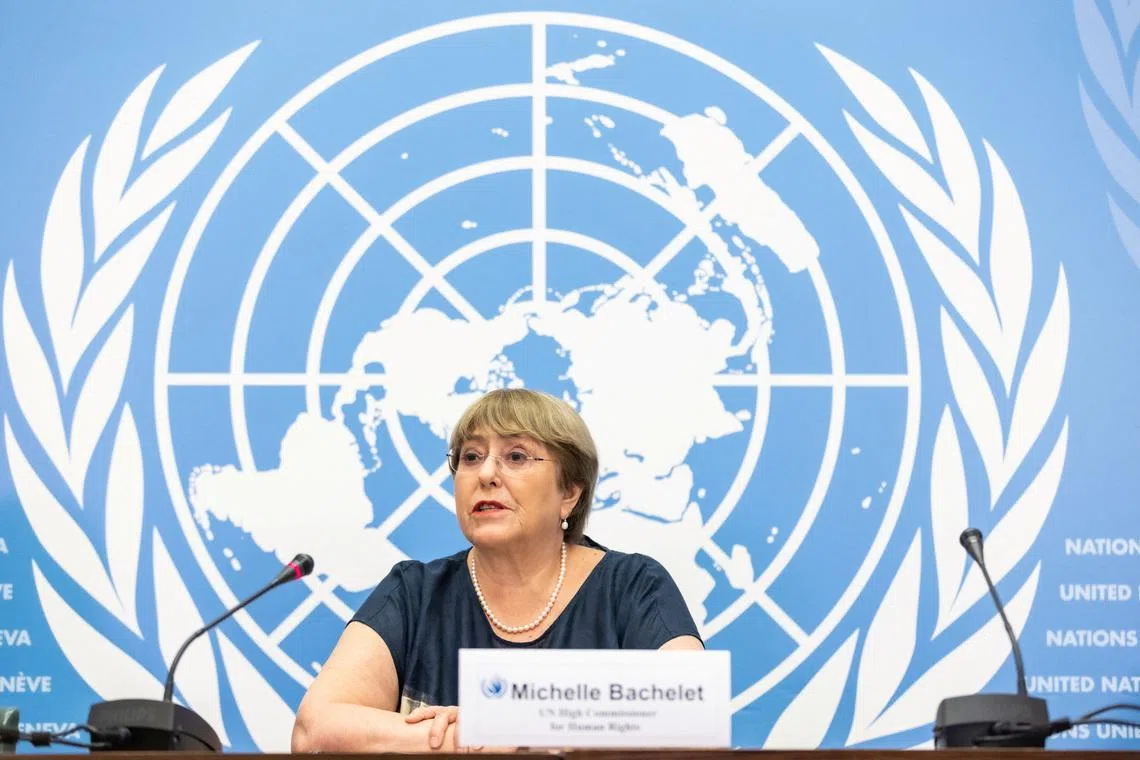
Michelle Bachelet has withdrawn her candidacy for United Nations Secretary-General after securing just one vote in a Security Council straw poll. The former Chilean president, initially backed by Brazil and Mexico, released a statement on September 19, 2026, pointing to shifting geopolitical winds and dwindling support.
The race to succeed current UN Secretary-General António Guterres, whose second term concludes on December 31, 2026, has shifted dramatically. Michelle Bachelet announced her exit from the contest in a video message published on social media. She previously led UN Women and served as High Commissioner for Human Rights, alongside two terms as president of Chile from 2006 to 2010 and 2014 to 2018.
Security Council Straw Polls Reveal Slipping Support
The decision to step down followed discouraging outcomes in the United Nations Security Council’s informal voting rounds. In the most recent consultation, Bachelet received only 1 vote in favor and 11 against. That tally marked a sharp decline from her earlier standing. During a preceding straw poll held on August 21, she pulled two favorable votes, six opposing votes, and seven abstentions. Recognizing the mathematical reality of the council’s informal tally, Bachelet concluded that the voting trend signaled an unambiguous moment to withdraw.
Confronting the Headwinds of Modern Multilateralism
She stated in a video published on social media that today she was announcing her decision not to continue with her candidacy for the office of Secretary-General of the United Nations.
Reflecting on the hostile climate facing internationalism, Bachelet noted that global conditions posed a constant headwind to her platform. She continued by saying that some would believe it was not the time for a candidacy like the one she wanted to represent, when the winds blow strongly against principles such as multilateralism, against international law, which is permanently transgressed, against the existence of scientific changes, which some deny despite scientific evidence, and against democracy and human rights, which are in danger.
Regional Alliances and the Shift in Santiago
Bachelet’s bid originally launched with tripartite backing from Brazil, Mexico, and Chile—the latter under then-President Gabriel Boric. However, political dynamics shifted when a subsequent administration under José Antonio Kast withdrew Chile’s official sponsorship, deeming the campaign’s prospects unviable given the global diplomatic landscape.
Despite Santiago’s reversal, Brazilian President Luiz Inácio Lula da Silva and Mexican President Claudia Sheinbaum maintained their robust support. According to persons close to the process, these supporting countries provided assistance that included having their ambassadors host the former president during the countries she visited for her electoral campaign. President Lula also received Bachelet in Brasília as part of the articulations for the succession in the UN.
Redefining Executive Leadership at the UN
In her formal resignation letter issued from Santiago on September 19, 2026, Bachelet emphasized that the campaign successfully altered the international conversation regarding executive leadership at the global body.

She declared that they had contributed to placing into the global debate the idea that the next Secretary-General must be a woman from Latin America, a truly independent person loyal to the principles of the Organization’s Charter and who defends them rigorously before States, regardless of their size or power.
The Remaining Field and Latin American Representation
With Bachelet exiting the race, attention turns to the remaining candidates. Preliminary indicators show other regional diplomats sustaining stronger tallies among member states.

Until that moment, candidate Rebeca Grynspan from Costa Rica led the voting with nine favorable votes, five against, and one abstention, while Carolyn Rodrigues-Birkett from Guyana received eight favorable votes.
Bachelet maintained in her parting correspondence that she holds no regrets over the undertaking. She reaffirmed her conviction that after 80 years of its creation, the international organization should be led by a woman from Latin America, noting that her region has the experience and values to lead the institution.
=== END ARTICLE ===
Продолжение темы

