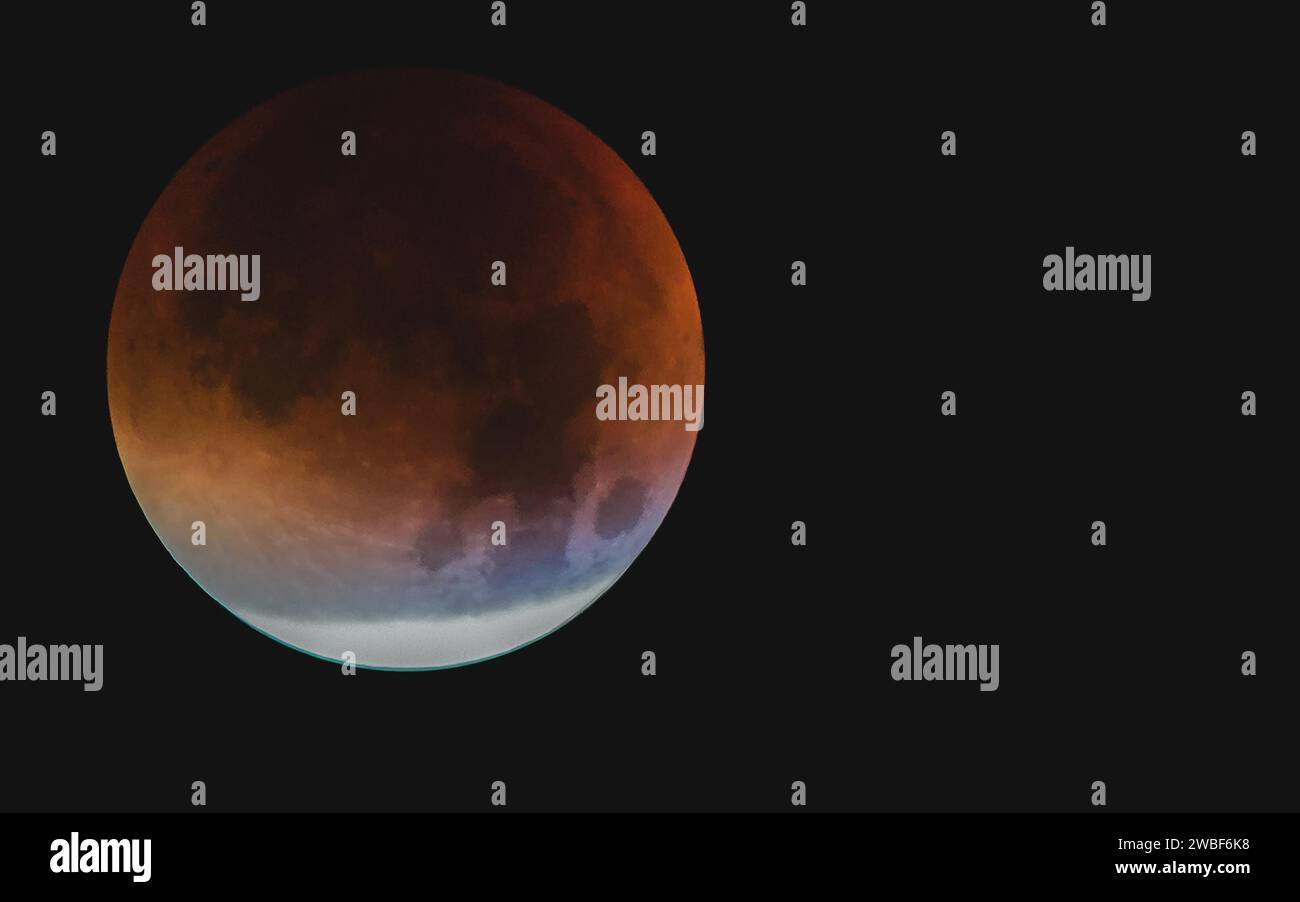
Skywatchers across multiple regions witnessed a near-total lunar eclipse late Thursday night into Friday morning, as approximately 96% of the moon passed through Earth’s umbra.
NASA Details the Near-Total Umbral Alignment
The celestial event unfolded as Earth positioned itself directly between the sun and the moon. A lunar eclipse is an eclipse that happens when Earth gets between the sun and the moon. Approximately 96% of the lunar disk passed through Earth’s umbra, falling just short of a total lunar eclipse according to NASA. This near-total eclipse on Thursday night was actually the Earth’s shadow cast onto the moon, giving it a reddish hue. The reddish-orange appearance is commonly referred to as a “blood moon.”
Regional Visibility and Time-Lapse Footage
Oklahomans got a fantastic view of the partial lunar eclipse that occurred late Thursday night. The partial lunar eclipse started around 9:20 p.m. Thursday and continued until almost 11:30 p.m. Oklahoma had clear skies on Thursday, giving a great view throughout the state. KOCO 5 viewer Aaron Jenison shared an amazing time-lapse video of the lunar eclipse from Yukon.

Further north, Iowans experienced similar viewing conditions as peak coverage obscured all but a sliver of the moon. Several viewers had their cameras pointed to the night sky Thursday to capture a lunar eclipse that obscured all but a sliver of the moon. Peak coverage of about 95% of the moon happened just before 11:15 p.m., with clear skies making conditions perfect for Iowans to see and photograph it. Scott Dearinger shared an impressive photo of the lunar eclipse at its peak of coverage in Iowa, about 94%, on Thursday, Aug. 27, 2026. Lisa Fox shared a photo of the lunar eclipse near its peak of coverage in Iowa on Thursday, Aug. 27, 2026. Selena Sinclair shared a photo of the lunar eclipse near its peak of coverage in Iowa on Thursday, Aug. 27, 2026. Briana Soto shared a photo of the lunar eclipse in Iowa on Thursday, Aug. 27, 2026. Lori Carnes shared a photo of the lunar eclipse in Iowa on Thursday, Aug. 27, 2026.
Long-Term Lunar Eclipse Timeline
Thursday’s event marked a notable return of the celestial phenomenon for regional observers who last experienced a lunar eclipse in Oklahoma since March. In the early morning of March 3, Oklahoma got to experience a total lunar eclipse. The next total lunar eclipse in the state will not be until June 25, 2029.

По теме
