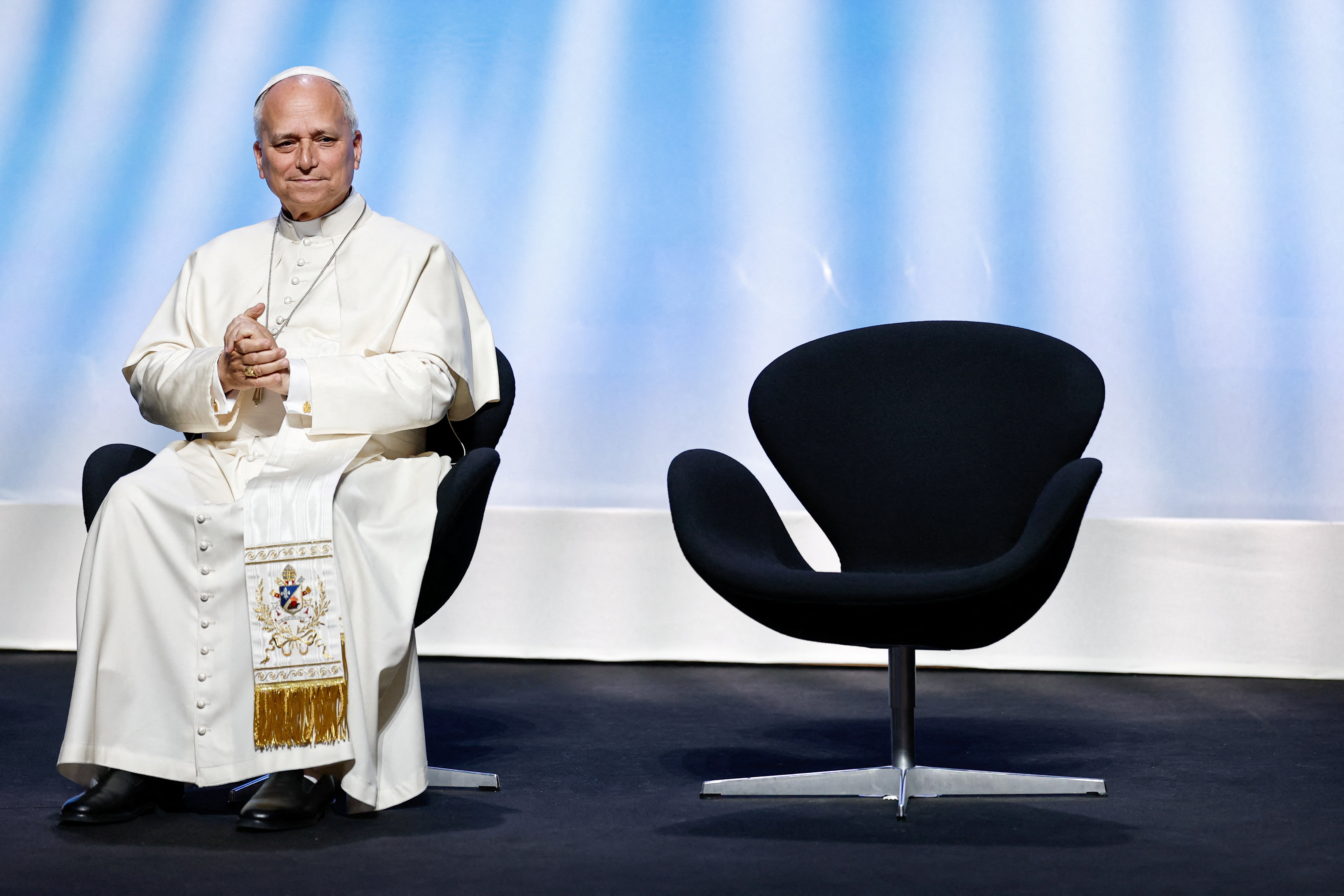
Pope Leo XIV concluded a four-day visit to France, using the trip to solidify his role as a global statesman. Addressing E.U. foundations in Metz and secular institutions in Paris, the pontiff condemned the use of religion to justify war while advocating for multilateralism and international law.
Diplomacy in the Birthplace of the European Union
Pope Leo XIV spent the final days of his French tour in Metz, a city situated near the border with Germany that holds symbolic significance for European integration.
The visit marked a shift in the public perception of the U.S.-born leader. While earlier trips to Africa and Spain showcased his ability to draw large crowds, the France visit highlighted his transition toward a more diplomatic, elder-statesman persona. Claude Dargent, a Paris-based expert on religion and politics, noted that observers are increasingly viewing the leader as more as a diplomat.
Stance on Global Conflict and Rearmament
Without explicitly naming Ukraine, Pope Leo used his platform to address the return of war to Europe. He urged leaders to exhibit courage in negotiation and to be willing to give up some positions for the greater good of peace.
During a news conference on his return flight to Rome, the Pope did not provide specific details on how those negotiations should proceed.
The Pope also addressed the current climate of military spending, which has intensified under pressure from President Donald Trump. While acknowledging that peace efforts must not be confused with a naive form of pacifism,
the pontiff warned against the illusion that rearmament is the answer.
He further criticized the concept of might is right,
advocating instead for a focus on common humanity.
Contrasting Views on International Law and Technology
The Pope’s trip included an address to UNESCO in Paris, where he warned against the rise of modern neocolonies
and the global quest for domination. He emphasized that international law and multilateralism serve as the best antidote to the desire for domination, which lies at the root of every conflict.
His visit also brought his views on technology into focus. Despite President Trump’s support for rapid advancements in artificial intelligence, Pope Leo reiterated concerns about the risks associated with the technology. While he stated on his return flight that he was not in panic mode,
he pushed back against those who dismiss the potential dangers of AI. This follows his earlier warnings in his first major encyclical.
Engaging the Faithful and Addressing Extremism
Despite the secular nature of his host country, the Pope drew significant crowds, including 800,000 people for an outdoor Mass in Paris and 80,000 young people at a stadium event. However, he remained firm on political and religious issues, specifically targeting far-right political extremism in Germany and elsewhere. That’s not an authentic expression of Christianity,
the Pope said, adding that leaders must return to the values of the Gospel, which are not about hatred and division.
Regarding his relationship with the White House, the Pope has sought to lower the temperature following public criticism from President Trump earlier this year. In April, the President described the pontiff as WEAK on Crime, and terrible for Foreign Policy.
Pope Leo told reporters he had no fear
at the time, but he has since refrained from escalating the feud, opting instead to challenge ideologies that use God’s name to justify violence.
По теме

