The federal government will cut more than 1.2 million acre-feet of water supply annually over the next two years from Arizona, California, and Nevada. Officials confirmed the mandatory reductions on Friday, aiming to protect the rapidly shrinking Colorado River reservoirs after state negotiators failed to reach a long-term consensus.
Federal water managers have intervened in the management of the Colorado River by issuing a mandatory operating framework that targets the river’s three Lower Basin states. Officials from the Bureau of Reclamation confirmed that annual supplies will drop by more than 1.2 million acre-feet starting in 2027. The emergency measure follows three years of deadlocked negotiations among the seven basin states to replace the current rules, which expire after 2026.
While the Department of the Interior lacks direct regulatory authority to force mandatory cuts on upstream states like Colorado, Utah, New Mexico, and Wyoming, it holds the power to manage downstream allocations and federal reservoirs. Upstream states are being asked to conserve water voluntarily, but they face no immediate mandatory reductions under the new federal directives.
Arizona Faces the Heaviest Burden Under New Federal Allocations
Under the near-term management plan for 2027 and 2028, water deliveries to the Lower Basin will be reduced by 1.25 million acre-feet each year. The distribution of these cuts falls unevenly across the three states based on legal priority rights and historical infrastructure development.

Arizona will absorb the largest share of the reductions, losing 760,000 acre-feet of water annually. California’s supply will decrease by 440,000 acre-feet per year, while Nevada will give up 50,000 acre-feet annually, representing roughly a 20% reduction across the region according to regional reporting. In addition to the required cutbacks, the states have volunteered to achieve at least 700,000 acre-feet of additional water savings through voluntary conservation targets over the two-year span.
The disproportionate impact on Arizona stems from the junior status of the Los Angeles Times, a network of canals supplying the Phoenix and Tucson areas. Because the CAP infrastructure is much newer than older California aqueducts, its water rights rank low in priority, placing it directly in the path of initial shortages.
State Leaders Push Back Against Unprecedented Reductions
The federal intervention has drawn sharp rebukes from state officials who argue the mandates go too far or fail to distribute the pain equitably across the entire river basin. Arizona Department of Water Resources Director Tom Buschatzke criticized the broader 10-year federal framework in a sharply worded letter released ahead of the final decision, warning that his state reserved the right to seek judicial intervention.

“Arizona does not accept a framework that gives the federal government the discretion to select from a wide range of alternatives — including catastrophic cuts … every two years for the next decade.”
Tom Buschatzke, Arizona Department of Water Resources Director
Meanwhile, California representatives struck a more measured tone while acknowledging the friction in the negotiations. JB Hamby, California’s Colorado River negotiator, noted that operating plans will be reassessed in two-year increments to maintain adaptive flexibility.
“California, Arizona, and Nevada have shown that states can compromise, make difficult decisions, and reduce water use when the river demands it,” wrote JB Hamby. “But three states cannot carry the responsibility of all seven.”
JB Hamby, California Colorado River negotiator
Protecting Lake Mead and Lake Powell From Dead Storage
The urgency behind the federal action stems from historic drops in the basin’s two primary reservoirs, Lake Mead and Lake Powell. Decades of chronic overuse, combined with rising regional temperatures and an intense multi-decade drought, have severely depleted flows along the 1,450-mile waterway which serves more than 40 million people.
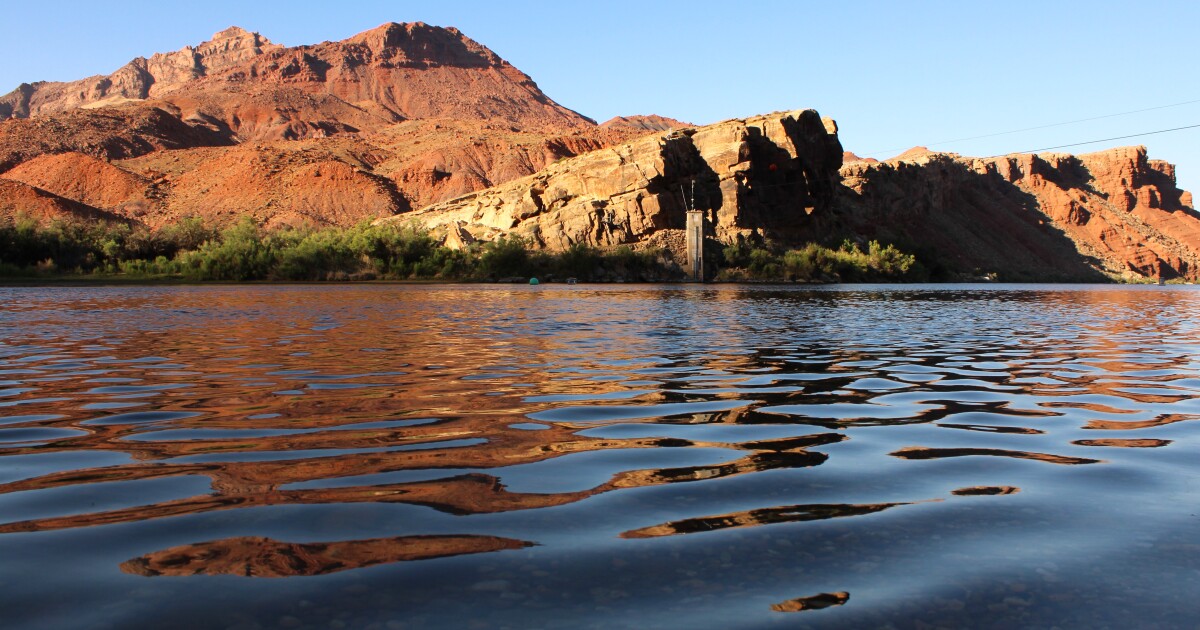
Federal forecasts indicate that water levels in Lake Powell could drop so low by the end of the year that hydroelectric turbines at the Glen Canyon Dam will no longer be able to spin according to Department of the Interior projections, threatening regional power generation for homes, businesses, and agricultural irrigation systems.
Under the new 10-year federal framework extending through 2036, total Lower Basin cuts could reach up to 3 million acre-feet annually during severely dry hydrology years as detailed in agency environmental impact statements. Officials maintain that the two-year operational cycles provide a necessary buffer, allowing room to incorporate a consensus-based seven-state agreement if the basin states manage to bridge their differences before future operating rules are drawn.
По теме