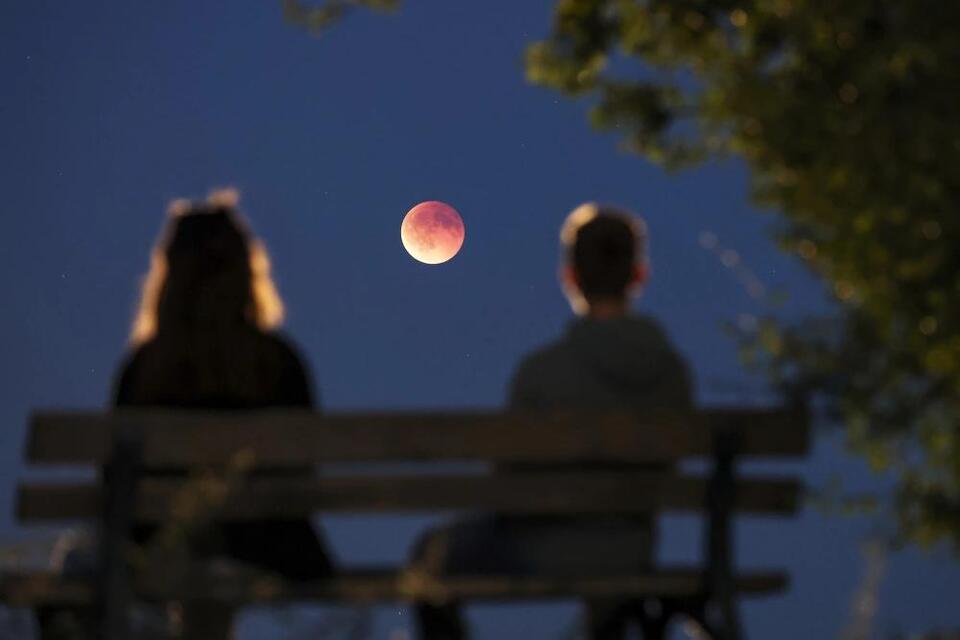
Stargazers across North and South America will experience a deep partial lunar eclipse Thursday night into Friday, masking 96% of the lunar surface. The celestial event peaks just after midnight EDT, offering billions a prime view before the next complete lunar blackout arrives in late 2028.
Earth’s shadow is preparing to envelop nearly the entire lunar surface in a deep partial eclipse visible to roughly one billion people across the Americas, according to reporting from the Associated Press. Coming just two weeks after a total solar eclipse crossed Greenland, Iceland, and Spain, this cosmic alignment puts the moon center stage as it passes directly behind Earth.
Visibility Across the Americas, Europe, and Space
While the Americas claim front-row seats for the entirety of the event, more than three billion people—representing 44% of the global population—will be positioned to catch at least a portion of the eclipse, the outlet reported. Observers in Europe, Africa, and the Middle East will see the eclipsed moon setting and cutting the show short, whereas Hawaii and northwestern sections of the U.S. and Canada will experience a late start as the moon rises.
Off the planet, a handful of travelers will catch the view from orbit. The eclipse may be visible to the ten people currently living and working in space: seven astronauts aboard the International Space Station and three crew members on China’s orbiting outpost. Space station commander Jessica Meir noted that orbit provides a unique perspective
for observing cosmic wonders like auroras and eclipses, according to the source.
Timing, Shadows, and the Space Program Spotlight
The partial phase of the eclipse will stretch for more than three hours, while the entire celestial passage—measured from the moment the full moon enters the outermost edge of Earth’s shadow until it departs—will last 5.5 hours. The peak is scheduled to occur just after midnight EDT. Because this alignment is not entirely perfect, the moon will not turn into a traditional blood moon, but Earth will cast a deep reddish-orange shadow across 96% of the lunar disk.
This lunar event unfolds as NASA maintains high momentum in crewed spaceflight. Following the Artemis II mission’s record-breaking lunar flyby in April, astronauts are preparing for eventual surface landings and the establishment of a crewed and robotic lunar base over the coming years. NASA astronaut Jack Hathaway, speaking from the International Space Station last week, emphasized the upbeat mood among flight crews: This is a great time to be part of the space program, right? We’re not slowing down,
he told the press.
Looking Ahead to Future Eclipses
Thursday night’s event marks the year’s second lunar eclipse and the fourth eclipse overall, following a total lunar eclipse that crossed the Americas, Australia, and eastern Asia in March. Stargazers who miss this week’s 96% blackout will have to wait quite a while for a complete lunar repeat in their local skies. The next total lunar eclipse will not occur until New Year’s Eve 2028, placing Asia and Australia at the center of the path, while North and South America will not see another full eclipse of the moon until 2029, according to the coverage.

Читайте также