Atolls are ring-shaped islands, often composed of multiple small islets, that encircle a lagoon. Found in warm tropical or subtropical waters where reef-building corals thrive, these structures serve as critical habitats for marine life. A 2023 census identified 494 oceanic atolls and 104 continental atoll systems globally. The majority of these are situated in the Pacific Ocean, which hosts 344, followed by 77 in Indonesian waters, 68 in the China Sea, 54 in the Indian Ocean, and 29 in the waters surrounding Australia.
The Formation and Nature of Atolls
Theories of Development
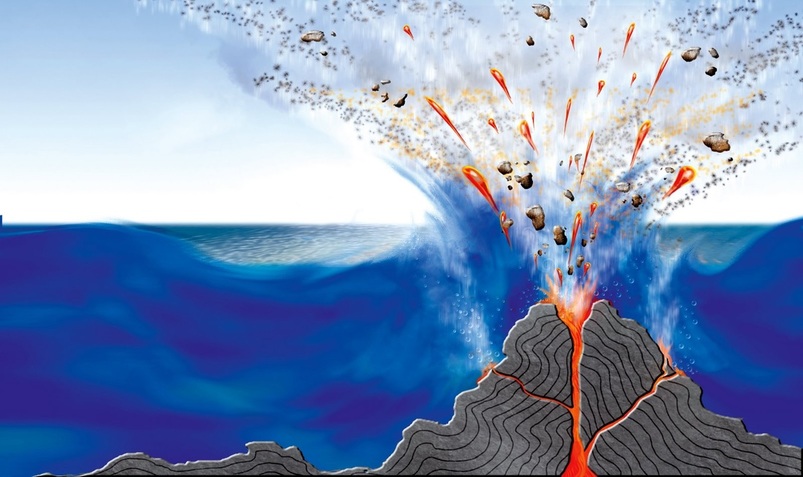
Scientific understanding of how atolls originate has evolved over time. The subsidence model, first proposed by Charles Darwin in 1842, suggests that atolls develop from underwater volcanoes known as seamounts. According to this theory, the top of a reef grows upward at roughly the same rate that the volcanic island sinks. As the land beneath disappears, the volcanic peak vanishes, leaving behind a barrier reef that forms the characteristic ring shape.
An alternative explanation, the antecedent karst model, was proposed in the 1930s. This theory posits that a limestone island—formed from an ancient, dead reef—is exposed during periods of low sea levels. Rainwater dissolves the limestone through a process called karstification, creating a hollowed-out basin. When sea levels rise, coral colonizes the raised outer rim, and the central basin floods to become a lagoon.
Ecological Significance and Geography
Atolls are vital for biodiversity, particularly for seabirds. Research published in Nature Ecology & Evolution estimates that over 31 million seabirds nest on atolls, representing approximately one-quarter of the world’s tropical seabird population. These locations are essential for the survival of species such as white terns, black noddies, and lesser frigatebirds, with more than half of their global populations nesting there.

Geographically, atolls vary significantly in scale and composition:
- Great Chagos Bank: Located in the Indian Ocean, it is the largest atoll by total area, stretching over 12,642 square kilometers. It is a protected Strict Nature Reserve administered by the UK.
- Huvadhu Atoll: Also situated in the southern Maldives, this atoll holds the record for the highest number of individual islands, containing 255 islets across 3,152 square kilometers.
Volcanic Origins and Plate Tectonics
The evolution of the seafloor, which provides the foundation for many of these structures, is driven by the movement of tectonic plates over hotspots—areas where hot, chemically distinct material from deep within the Earth rises to the surface. As plates crawl over these hotspots, they create volcanic tracks. Researchers describe these tracks as “footprints” that get progressively older as they move away from the active source.

Recent findings have clarified the history of these systems in the Pacific. Scientists from the University of Hawaiʻi at Mānoa, the University of Maryland, and other institutions recently connected the Louisville hotspot in the southern Pacific to the 120-million-year-old Ontong-Java Plateau. By analyzing ancient rock samples near Samoa, the team identified older volcanic segments that allowed them to revise models of Pacific plate motion. This research provides a more complete history of how the Pacific Ocean basin has evolved over millions of years, moving from disconnected volcanic systems to a clearer understanding of the seafloor’s long-term transformation.
Продолжение темы

