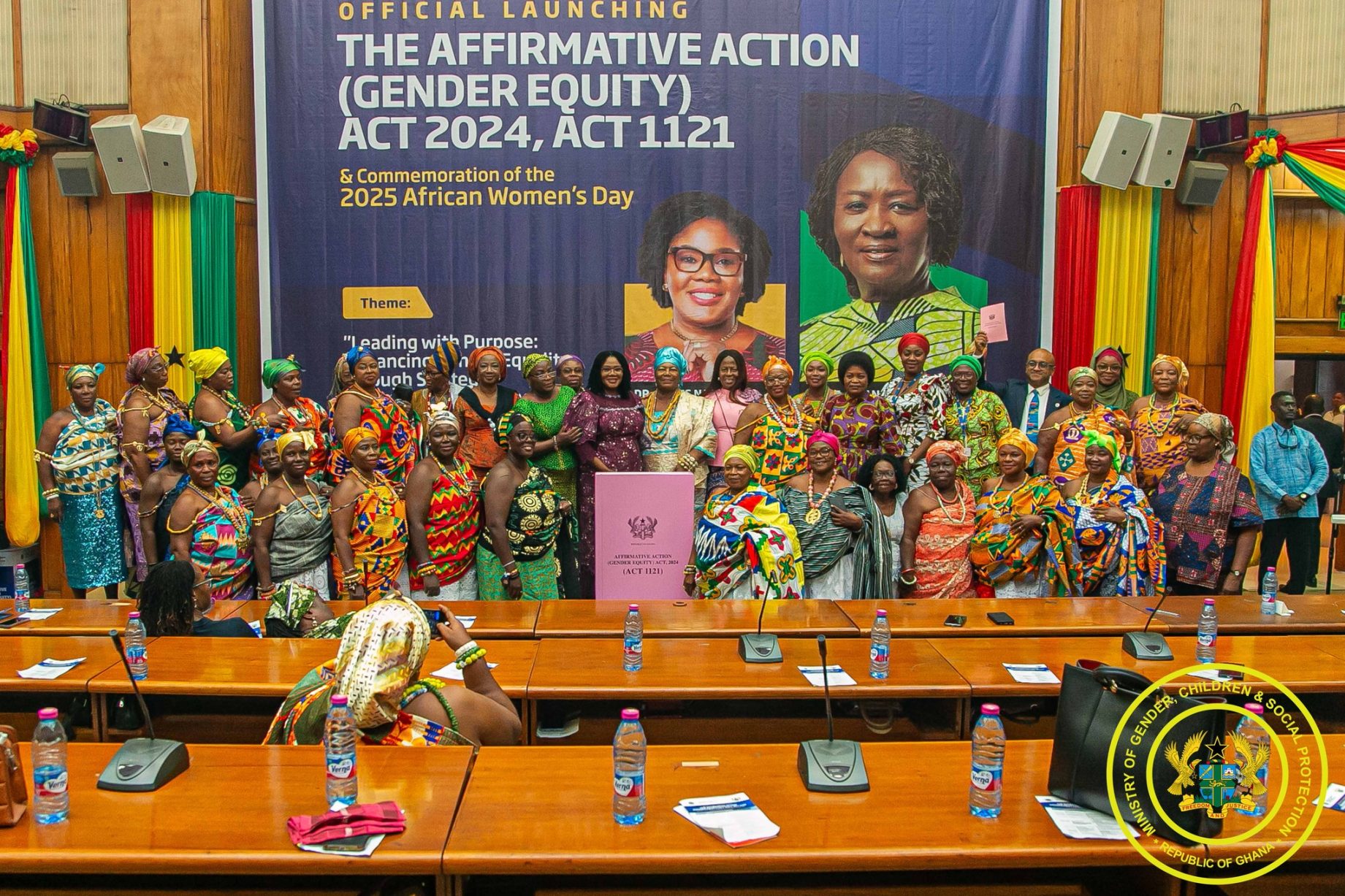
Ghana’s Ministry of Gender, Children and Social Protection held a capacity-building workshop in Accra focusing on the practical enforcement of the Affirmative Action Act, 2024.
Moving a piece of legislation from the statute books into everyday reality remains a climb in Ghana, where officials and civil society advocates warn that implementation consistently lags behind policy creation. The Ministry of Gender, Children and Social Protection convened a targeted capacity-building workshop in Accra last Thursday to tackle this gap head-on, focusing specifically on how the Affirmative Action (Gender Equity) Act, 2024, can alter institutional behavior.
Dr Agnes Naa Momo Lartey and Ministry Officials Press for Real Action
Addressing attendees at the Accra workshop, the Minister of Gender, Children and Social Protection, Dr Agnes Naa Momo Lartey, stated that the national conversation has shifted past the era of merely advocating for the law’s passage. The focus is now firmly on execution, impact, and accountability.
“We want to see its impact. It is an opportunity to see more women in leadership. We need to speak on the issues needed to make this happen. It is not about one of the sexes, not about an individual but about the development of the nation”, she added.
Dr Agnes Naa Momo Lartey, Minister of Gender, Children and Social Protection
The ministry’s Chief Director, Marian W.A Kpapkah (PhD), opened the proceedings with a welcome address where she called for discussions on the barriers which prevented the attainment of equity as required by the law. Following her welcome address, the Head of the Gender Equity Committee Secretariat of the ministry, Vera Karikari Bediako, gave a presentation on the Act.
Bridging the Gap Between Policy and Grassroots Awareness
While government bodies and policy advocates are familiar with the legislation, civil society voices point out that ordinary citizens remain largely unaware of its protections. Speaking on Asaase Radio’s Townhall Talk on Friday (18 September), Amtu Akumfi-Ameyaw, co-founder of On This Side, argued that the law’s ultimate success hinges on widespread public education that reaches far beyond professional circles in Accra. She said the passage of the law must translate into measurable changes in women’s representation and participation, warning that the effectiveness of the law would ultimately depend on how institutions implement and enforce it.
“It’s very normal as Ghana that we have all the very nice and beautiful policies. But when we get to the time of implementation, we are lagging behind,” she said.
Amtu Akumfi-Ameyaw, Co-founder of On This Side
Akumfi-Ameyaw emphasized that public awareness campaigns must penetrate rural and regional communities where young women and people in communities across the country may not have direct access to information regarding gender equity laws.
“How are you going to walk into a random community and then ask a 20-year-old girl that has never heard of the Affirmative Action law, what does it say, how does this relate to you?” she asked.
Amtu Akumfi-Ameyaw, Co-founder of On This Side
She called on the Ministry of Gender, Children and Social Protection and other relevant institutions to intensify public education on the legislation, arguing that the passage of the Act should be treated as a starting point rather than the conclusion of Ghana’s gender-equity efforts. Government has previously said it has established a Gender Equity Committee and undertaken sensitisation and implementation work around the legislation.
Targets, Accountability, and the Media’s Role
Officially designated as Act 1121, the Affirmative Action (Gender Equity) Act establishes a framework aimed at increasing female participation in public life. Government publications state that the law seeks to progressively increase women’s representation in decision-making, with a 30% target for 2024–2026. Advocates argue that government institutions should lead by example by ensuring that their appointments, employment practices and decision-making structures reflect the objectives of the legislation.

To examine how public accountability is shaped, the Accra workshop featured a dedicated panel discussion on the topic Beyond the headlines: Female media practitioners’ role in implementing the Act to drive accountability and institutional change
. The panel brought together voices including The Editor of The Mirror, Doreen Hammond, a journalist with TV3, Sarah Apenkroh, and a gender advocate, Selikem Acolatse Apaloo, who examined how participants can enhance their understanding of the provisions of the Act, strengthen their capacity to communicate gender equity issues effectively, and promote accurate, balanced reporting on the implementation of the law.
По теме

