Deadly flash floods and glacial collapse across the Nepal-China border have left at least 270 people dead and nearly 1,500 missing, including five New Zealanders, 35 Australians, and dozens of other foreign nationals. Emergency personnel are utilizing helicopters to reach communities cut off by cascading walls of mud and rock.
A catastrophic glacial collapse and massive debris flow slammed into the Himalayan valleys along the border between Nepal and Tibet on Wednesday, August 27, 2026, washing away villages, roads, bridges, and power infrastructure. Police and tourism officials confirmed that the death toll has climbed to at least 270 people, with approximately 1,500 individuals reported missing across the rugged, mountainous terrain.
USGS Seismic Analysis Identifies Glacial Collapse
Geological Survey (USGS) clarified that the seismic event was actually generated by the catastrophic collapse of glacial rock and ice. The agency detected seismic energy resulting from the detachment of a large mass of ice and rock that rapidly liquefied into a destructive debris flow.
Foreign Nationals and Missing Citizens Traced Worldwide
The disaster zone is a heavily frequented corridor for trekkers, workers, and pilgrims traveling between Lhasa in Tibet and the Nepalese capital of Kathmandu. Among the missing are hundreds of foreign nationals from more than two dozen countries, including the United States, Britain, Canada, India, Australia, and New Zealand.
The New Zealand Ministry of Foreign Affairs and Trade (MFAT) confirmed that five New Zealanders are among the missing. Four have been identified as Suhasini Reddy, Auckland man Dejan Kuzmic, and Hamilton couple Mihir and Kinnari Patel. Rajeev Reddy recounted that his sister Suhasini was due to meet Chinese authorities near the border for a crossing permit at 11 a.m. local time, shortly after the tragedy unfolded just after 8:30 a.m.
Meanwhile, communities internationally are organizing responses. In Chicago, where roughly 15,000 Nepali Americans reside, local leaders convened to establish emergency relief funds for survivors. In Australia, where at least 35 citizens are missing, the Nepalese community expressed profound shock as families awaited news from loved ones.
Dramatic Survivor Accounts From the Mud
Survivors described terrifying moments as walls of water and debris overtook residential settlements and border checkpoints. Keshav Prasad Baral, a 68-year-old survivor receiving hospital treatment, watched the torrent approach his home.
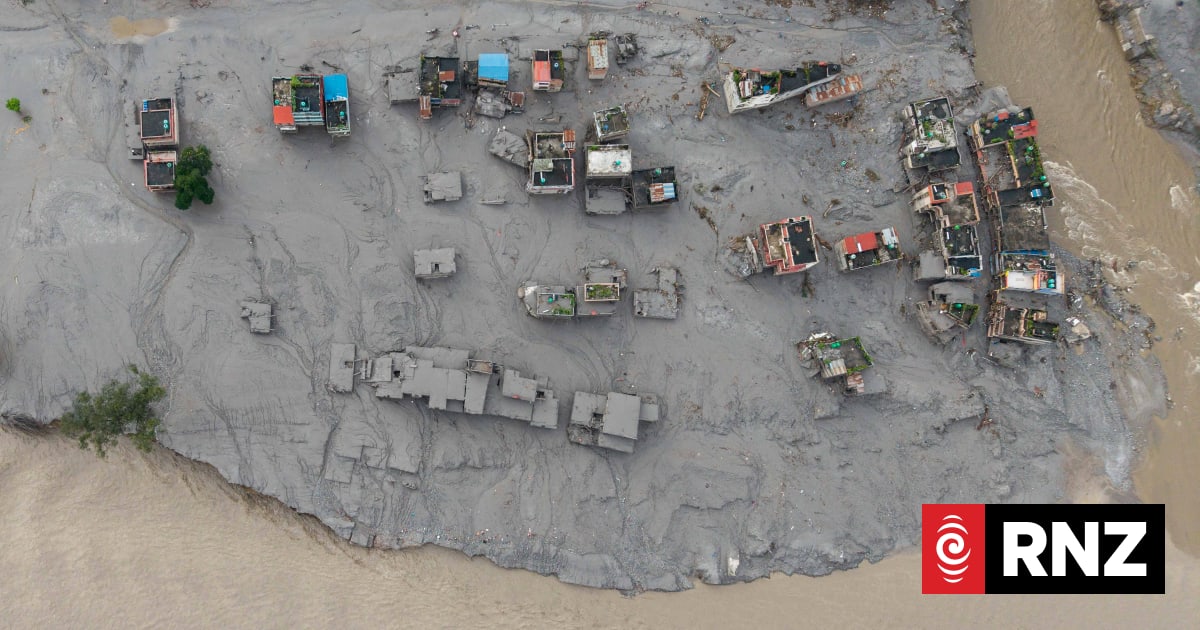
“As it got closer, it kept rising higher and higher. When I saw it enter our home, I tried to grab my wife’s hand and take her to the terrace. But she was swept away by the mud.”
Keshav Prasad Baral, Survivor
Baral was rescued by helicopter four hours later, while his wife remained unaccounted for beneath the debris. In a separate account, 24-year-old Bibek Kumal was working in a five-foot-deep pit in Bidur when his co-workers shouted warnings.
“I started running. Then a wall of water came thundering down as if it were an earthquake.”
Bibek Kumal, Survivor
Kumal survived by clinging to a mango tree after being swept away, though he sustained an injury to his right leg.
Rescue and Relief Operations Underway
More than 5,000 army and police rescue personnel have been mobilized across Nepal. Helicopters are ferrying tents, food, and medical supplies to remote locations cut off by washed-out roads and destroyed infrastructure.

International aid has begun flowing into the region. The U.S. In New Zealand, Prime Minister Christopher Luxon and Foreign Minister Winston Peters offered deep condolences, while the Hawke’s Bay and Auckland Nepalese societies organized fundraisers and vigils to support victims.
Chinese state broadcaster CCTV reported that rescue operations on the Tibet side face severe complications because an upstream lake in Gyirong county remains dammed by debris, raising risks of secondary floods as three additional days of rain are forecast for the region.
Ещё по этой теме