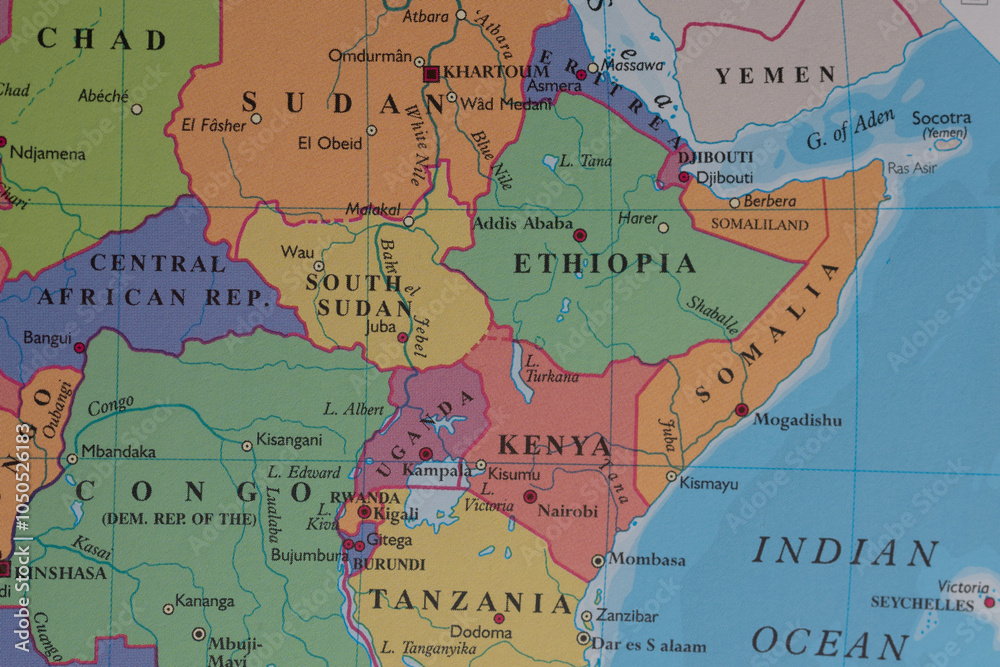
Uganda’s defence minister announced Friday that Ugandan troops will remain in Somalia under a bilateral agreement, despite growing uncertainty surrounding the future of the African Union mission. The decision follows Washington’s move to end crucial logistical payments to the United Nations Support Office in Somalia by the end of the year.
Bilateral Safeguards and Troop Deployments in Mogadishu
Uganda maintains a substantial military presence in Somalia split across two distinct frameworks.
Speaking in Kampala at the conclusion of the Eastern Africa Standby Force meeting, Ugandan Defence Minister Kiryowa Kiwanuka confirmed that the bilateral deployment will ensure continued military presence even as the broader African Union mission faces severe funding headwinds. Mogadishu and Kampala formalized this bilateral channel with an agreement signed at the end of 2024, paving the way for troop deployments that began in 2025.
The arrangement that we are going to have on how we remain in Somalia is going to evolve, but…
Kiryowa Kiwanuka, Ugandan Defence Minister
Funding Shortfalls and the Future of AUSSOM
The uncertainty surrounding AUSSOM stems directly from Washington’s decision to terminate payments to the UN Support Office in Somalia (UNSOS) by the close of the year. UNSOS provides essential logistical support to the peacekeeping mission, leaving regional capitals scrambling to evaluate the financial fallout.

Defense ministers representing AUSSOM troop-contributing countries—Burundi, Djibouti, Egypt, Ethiopia, Kenya, and Uganda—met alongside Somali representatives in Kampala to address the funding crisis. Participants emphasized the necessity of an orderly transition.
Ministries across the region are now planning for an orderly, coordinated
exit of the overarching AU mission designed to facilitate a complete handover of security responsibilities to Somali national forces. Yet, beyond the Ugandan bilateral framework, other regional actors are signaling similar intentions to maintain boots on the ground.
Regional Intentions Amid Political Instability in Somalia
Military sources indicate that Uganda is not alone in positioning itself for a long-term presence outside the traditional AUSSOM structure. According to sourced intelligence from AFP, military officials understand that Kenya, Ethiopia, and Egypt also intend to keep troops stationed in Somalia through 2027.

This military maneuvering unfolds against a backdrop of prolonged security challenges and domestic political friction. Somalia has spent roughly two decades battling Al-Shabaab insurgents. That conflict intensified last year when the Islamist group launched a counter-offensive that reclaimed significant territory previously captured by federal forces during 2022 and 2023 operations.
Simultaneously, the federal government faces deep political fragmentation following President Hassan Sheikh Mohamud’s decision in March to alter the constitution ahead of planned elections—a move strongly denounced by political opponents as a unilateral grab for power.
По теме