Federal immigration authorities have formalized new guidelines allowing neighborhood investigations for citizenship applicants, granting officials discretion to consult neighbors, employers, and colleagues. Effective immediately for pending and future cases, the updated policy also permits applicants to submit voluntary character reference letters from U.S. citizens to support their naturalization.
The U.S. Citizenship and Immigration Services has updated its policy manual guidelines to evaluate and corroborate more thoroughly the requirements of individuals applying for naturalization as a path to obtain U.S. citizenship. According to the agency’s published updates, the strategy revives neighborhood investigations under section 335(a) of the Immigration and Nationality Act, a practice that allows investigators to speak with people who know the applicant.
How USCIS Neighborhood Investigations Operate Under the New Guidance
The revived verification process applies to both pending applications and those filed on or after August 25. Under the updated framework, immigration officials possess the discretion to contact individuals throughout a community to verify information and documentation provided by applicants.
These inquiries can encompass a broad range of personal background details. According to legal specialists and agency guidance, investigations may touch upon family situations including marriages, divorces, and the number and status of children, as well as employment periods, unemployment, business activities, financial obligations, and educational attendance. Investigators may also examine social activities, associations, habits, community reputation, criminal backgrounds, domestic and foreign military service records, travel history, foreign activities and residences, current and past residences, credibility and veracity, and links to the United States including loyalty and attitude toward the country and the U.S. Constitution.
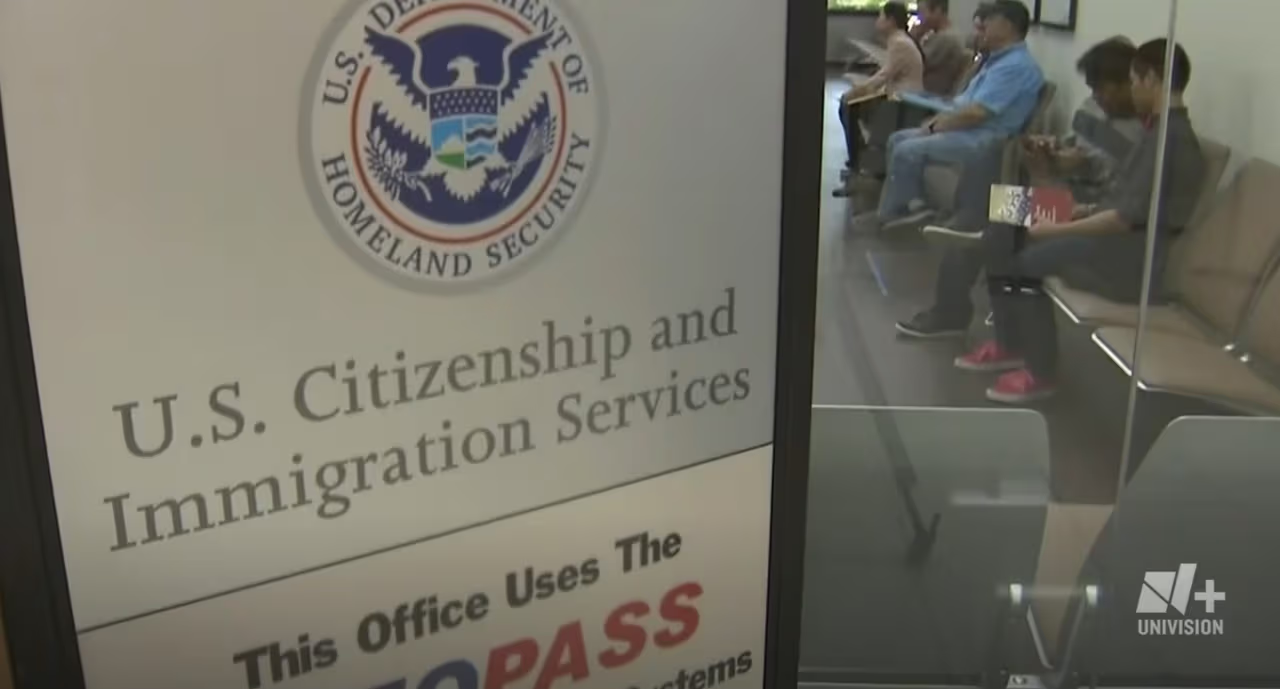
Immigration attorneys point out that the expanded scrutiny introduces new variables into the naturalization process. Immigration attorney Jesús Novo explained that applicants are now going to turn over all their information to the government, information that is not actually necessary to determine whether or not they are an eligible person for citizenship.
The specialist noted that officials can contact neighbors, employers, coworkers, homeowners, and other community members to verify information and determine if a candidate is viable. Experts state that the primary objective for U.S. authorities is detecting fraud, confirming physical residency, and evaluating good moral character.
Kevin considered that people do not know what intentions the neighbors might have, above all.
Voluntary Reference Letters and Discretionary Exemptions
Applicants are not automatically subject to a neighborhood check. The agency maintains the discretion to exempt individuals from this investigative step following an individualized review of each file or for specific categories of cases when determined appropriate. To help secure an exemption, applicants can voluntarily submit personal reference letters.

The policy outlines specific expectations for these supporting documents. Aspirants can attach at least two character reference letters alongside Form N-400. Guidelines state these should preferably be written by U.S. citizens who know the applicant personally and are not direct family members.
Such testimonials are intended to demonstrate the foreign national’s eligibility, character, loyalty to the United States, and adherence to constitutional principles, alongside the fulfillment of other naturalization requirements. USCIS will weigh these voluntary submissions when deciding whether to waive a neighborhood investigation for a specific case.
Evaluating Moral Character and Community Standing
The push for deeper background checks aligns with ongoing administrative efforts under President Donald Trump’s second mandate to evaluate good moral character and confirm physical residency. Previous policy adjustments noted that the agency could consider coworker opinions alongside neighbor feedback to assess an applicant’s integration, good moral character, and contributions to the “happiness” of the United States.
Carlos M. García commented that he believes this is also meant to scare our community, and it is also meant to keep people from applying.
Attorney Wendolee Rodríguez mentioned regarding applications under the new guidelines that it is important to make sure it is as correct as possible.
Legal advocates stress that initiating the naturalization process now triggers a comprehensive examination of an applicant’s entire immigration history, including how permanent residency was initially acquired. Experts recommend seeking professional counsel from a qualified attorney before submitting documentation under the updated rules.
По теме