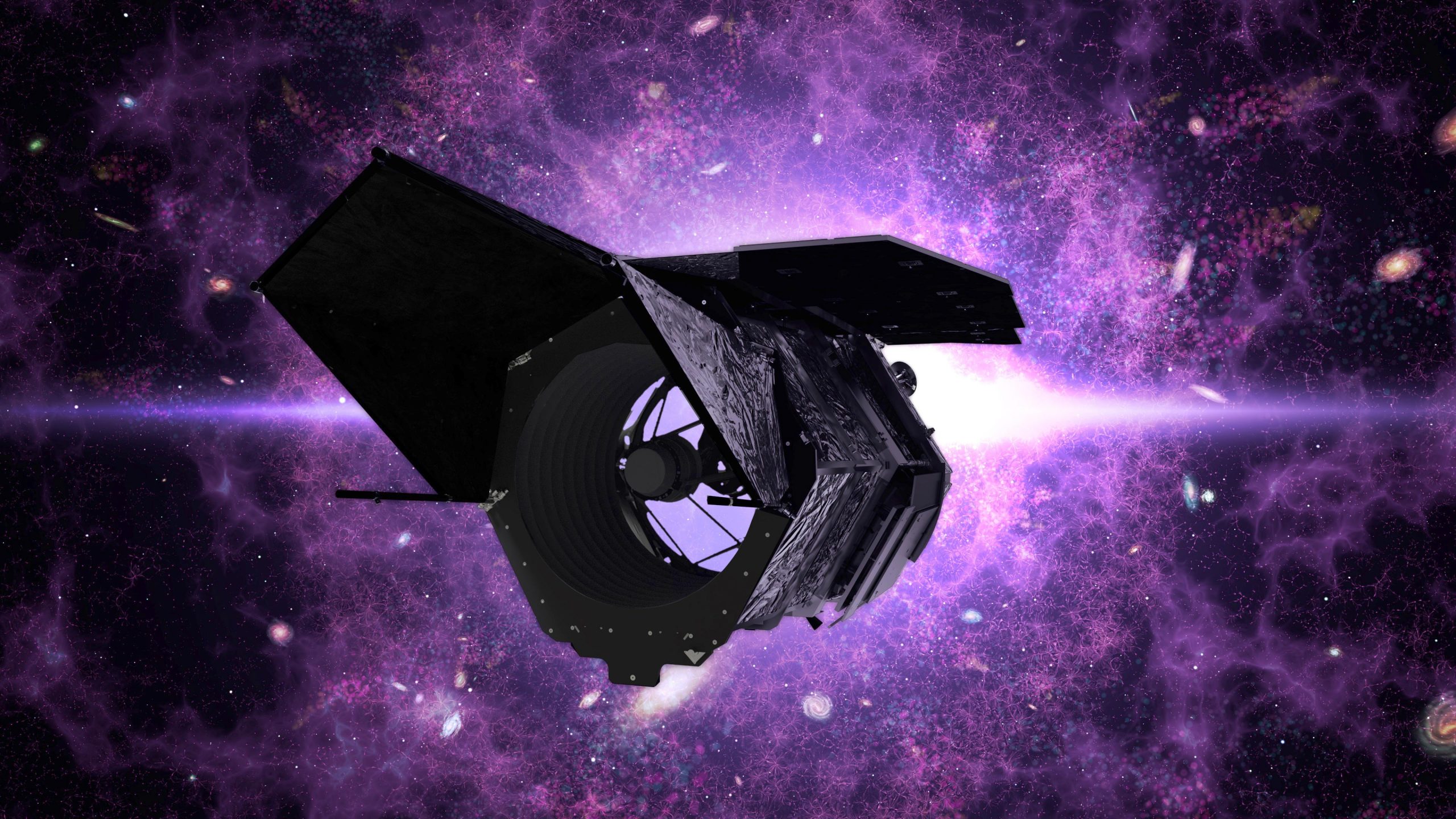
NASA is preparing to launch its next flagship space observatory, the Nancy Grace Roman Space Telescope, from Launch Complex 39A at the agency’s Kennedy Space Center in Florida, according to NASA. The roughly $4 billion project is scheduled to lift off aboard a SpaceX Falcon Heavy rocket, with NASA and SpaceX targeting a launch time no earlier than 7:26 a.m. EDT on Sunday, Aug. 30, according to NASA and Devdiscourse.
NASA Prepares to Launch the Nancy Grace Roman Space Telescope
Named after NASA’s first chief astronomer, the observatory pairs sharp infrared vision with a field of view at least 100 times larger than the Hubble Space Telescope, according to NASA. Researchers at Ohio State University note that the telescope will capture the sky hundreds of times faster than Hubble and detect about a billion galaxies alongside 20 billion stars.
Probing Dark Energy, Dark Matter, and Gravity
Scientists plan to use the mission to investigate the universe’s biggest mysteries, including dark energy, dark matter, and the fundamental nature of the cosmos, according to Devdiscourse. Ordinary matter accounts for perhaps 5% of the universe’s contents, while dark matter represents about 27% and dark energy may represent about 68%, Devdiscourse reports. Mustapha Ishak, a cosmologist at the University of Texas at Dallas and a member of Roman’s scientific collaboration, noted that recent results from the Dark Energy Spectroscopic Instrument (DESI) collaboration point to tantalizing hints of a time evolution of dark energy, raising questions about whether Einstein’s theory of general relativity requires modification on the largest scales.

More than two dozen faculty, students, and postdoctoral scholars at Ohio State University contributed to designing Roman’s surveys, including the High-Latitude Wide-Area Survey, which focuses on the structure and expansion of the universe over cosmic time. David Weinberg, a distinguished university professor of astronomy at Ohio State University, stated that mapping clusters of dark matter will help researchers understand why gravity on a cosmic scale differs so radically from gravity on the scale of a solar system or galaxy.
Exoplanet Discovery and Orbital Destination
Beyond cosmology, the mission will extend the search for potentially habitable worlds by utilizing a planet-hunting method called microlensing alongside the traditional transiting technique, according to Ohio State University. Scott Gaudi, principal investigator of the Roman Galactic Exoplanet Survey Project Infrastructure Team and a professor of astronomy at Ohio State University, stated that the telescope will enable researchers to detect around 100,000 worlds and discover extremely rare phenomena. The observatory will also demonstrate new technology designed to directly image nearby exoplanets, according to Devdiscourse.

Following separation from the rocket, the spacecraft will travel to the second Sun-Earth Lagrange point, or L2, situated approximately one million miles from Earth, which is about four times the distance to the Moon and the same orbital location where the James Webb Space Telescope resides, according to NASA and Devdiscourse. The mission has a five-year primary lifetime, though NASA indicates it may carry enough fuel to operate for five additional years, according to NASA and Devdiscourse.
По теме

