
SpaceX launched its 407-foot Starship megarocket on its 14th test flight from Texas, achieving orbital flight for the first time and successfully deploying 26 next-generation Starlink V3 satellites before shortening the mission out of an abundance of caution after an engine failure during ascent.
SpaceX Starbase Facility in Boca Chica Beach
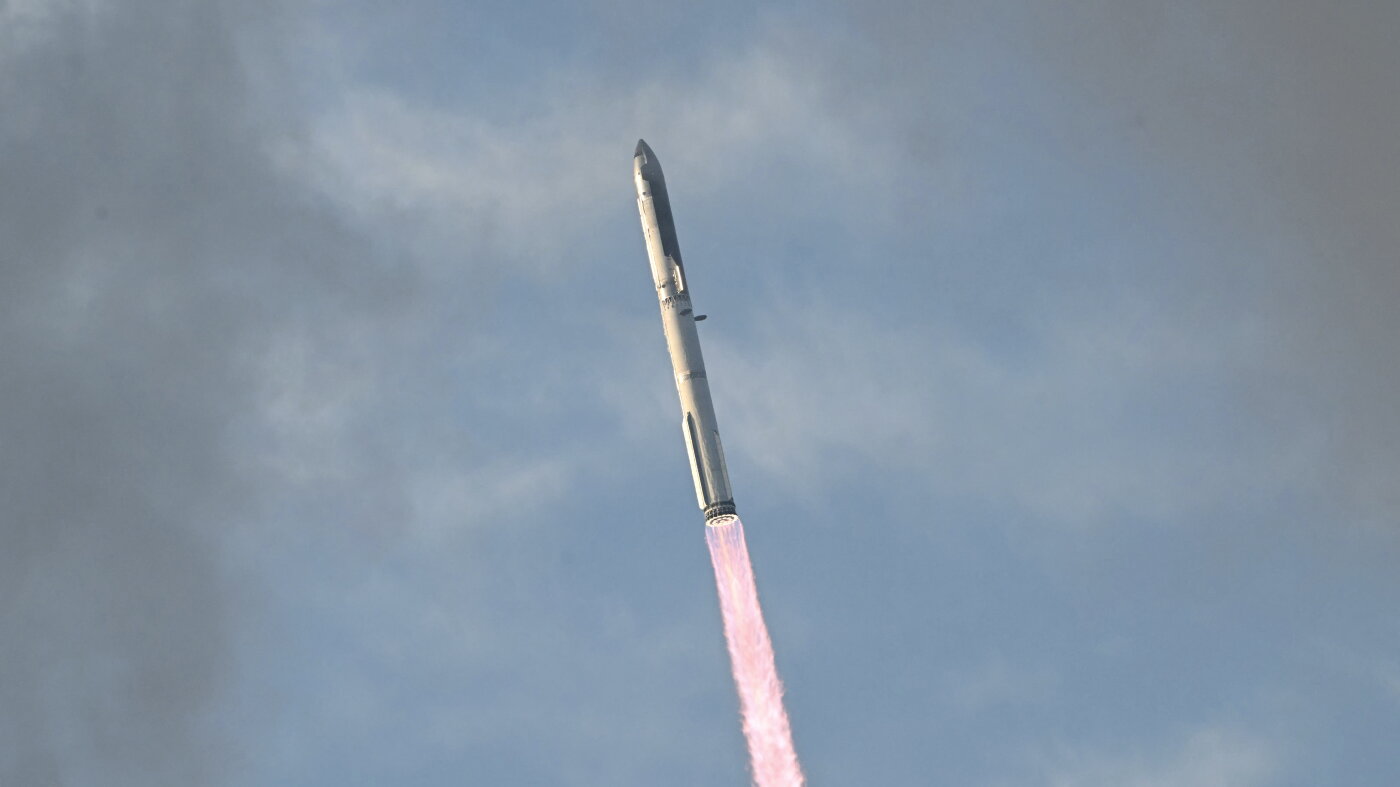
SpaceX accomplished a major milestone during its 14th test flight, sending the world’s largest launch vehicle into Earth orbit for the first time. The megarocket lifted off from the company’s Starbase facility in Boca Chica Beach, Texas, at 7:48 a.m. CT. At 7:48 a.m. CT, Starship’s Super Heavy booster ignited its 33 rocket engines to send the spacecraft on its 14th flight. Two-and-a-half minutes after launch, Starship separated from the booster and continued into space. While previous test flights remained suborbital, this mission pushed the vehicle to orbital speeds. The 407-foot-tall (124 meters) Starship reached orbit for the first time ever on Flight 14 — and it did something productive while it was up there. At 407 feet tall, it is the largest launch vehicle ever designed, 44 feet taller than NASA’s retired Saturn V. Founder Elon Musk’s showpiece rocket carried 26 of the latest and most advanced Starlink satellites to join the 11,000 older models already providing internet service.
Engine Failure During Ascent
The ascent hit turbulence early when one of the six engines on Starship failed during ascent, prompting SpaceX to decide whether to continue to orbit. About 22 minutes into the flight, the team decided it was safe to do so. SpaceX launched its enormous Starship into orbit for the first time Monday and successfully delivered the most advanced Starlink satellites yet, but cut the flight short to ensure safety.
Deploying Next-Generation Starlink V3 Satellites in Low Earth Orbit
Once in orbit, Starship’s upper stage, known as Ship, successfully delivered 26 of SpaceX’s Starlink Version 3 (V3) Starlink satellites to low Earth orbit (LEO) today. And we got great views of the deployment, from cameras aboard Ship and on the satellites. SpaceX currently operates more than 11,000 Starlink satellites in LEO — by far the largest spacecraft network ever assembled. But the Starlink V3 megaconstellation will be a completely different animal. Construction of SpaceX’s next-gen Starlink satellite megaconstellation is officially underway. The milestone occurred today (Sept. 28), during the 14th test flight of the company’s Starship megarocket.
Cutting the Flight Short Over Engine Safety Concerns
Although mission planners originally intended for a 10-hour flight — consisting of six laps around Earth — the SpaceX control team decided to cut the flight to three hours. The noncrewed orbit was planned to last 10 hours. The company had been aiming for a 10-hour flight, spanning six full laps around the Earth, to demonstrate that it is ready for the program lunar Artemis de la NASA. The vehicle reentered Earth’s atmosphere and splashed down in the Pacific Ocean north of Hawaii at 11:58 a.m. ET, tipping over and erupting into flames. Starship se volcó y estalló en llamas al amerizar, acabando la misión con un final dramático. El cohete insignia del fundador Elon Musk casi no llegó a órbita cuando uno de sus motores se apagó demasiado pronto. Pero con todo lo demás funcionando bien y el motor averiado sin ser ya necesario, los controladores decidieron tras varios minutos tensos proceder según lo planeado.
Indian Ocean and Pacific Ocean Splashdown Near Chile
The earlier test flights ventured no farther than the Indian Ocean halfway around the world, often crashing in flames and briefly skimming space. This time, SpaceX was intent on circling the globe from an altitude of 170 miles — not just once but six times over almost 10 hours, ending with a Pacific splashdown near Chile.
Implications for NASA Artemis Moon Missions and Future Expansion
The spacecraft reentered over the Pacific and amerizó al norte de Hawai tres horas después de despegar de Texas. Super Heavy is designed to be reusable by returning to its launch site, where it is caught by the launch tower. The first-stage booster wasn’t meant to return this time.
More on Starship
Читайте также

