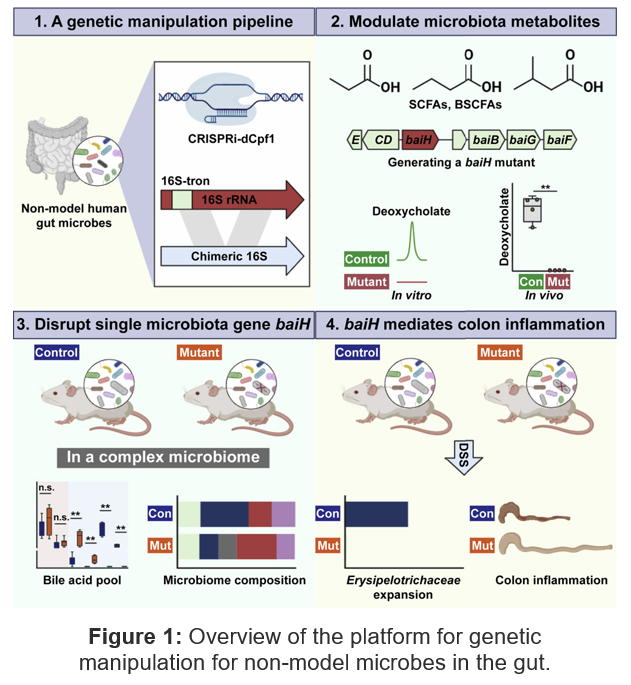
Investigators at Weill Cornell Medicine have created a new set of molecular tools designed to regulate gene activity in Clostridia, representing one of the most common classes of bacteria residing in the human intestinal tract. In healthy people, Clostridia species comprise half of all gut bacteria, producing metabolites that are widely considered beneficial for human health and immune regulation. However, certain strains are linked to various conditions, including botulism, inflammatory intestinal disorders, and metabolic diseases such as diabetes and cancer.
Weill Cornell Medicine Researchers Develop Genetic Toolkit for Clostridia Gut Microbes
The research findings detailing these molecular mechanisms were published on August 25 in Cornell, according to Weill Cornell Medicine. Dr. Chun-Jun “C.J.” Guo, associate professor of immunology in medicine in the Division of Gastroenterology and Hepatology and a scientist at the Jill Roberts Institute for Research in Inflammatory Bowel Disease at Weill Cornell Medicine, emphasized the necessity of the breakthrough.
There is no way to answer this question without having a genetic toolset that will allow us to study the Clostridia obtained from clinical strains,
Dr. Guo stated, as detailed by Weill Cornell. Drs. Ting-Ting Li and Xu Chen, both postdoctoral associates in the Guo laboratory during the study, served as the lead authors.
Controlling Gene Expression and Manipulating Metabolites
To establish precise control over specific Clostridial genes, the research team focused on DNA sequences known as promoters, which naturally govern gene expression activity within these microbes. The scientists evaluated 67 distinct regulatory sequences isolated from a single Clostridia strain to identify the one capable of driving the highest level of gene activity. Once identified, the team attached a chemical inducer “switch” to the strong gene promoter, allowing researchers to turn the promoter on or off at will.
Using this developed system, the investigators successfully manipulated levels of deoxycholic acid, a metabolite that can suppress the body’s natural anti-tumor immune response in colorectal cancer while simultaneously enhancing certain types of immunotherapy. Additionally, the team engineered a CRISPR system capable of operating within Clostridia isolates derived from clinical samples. This CRISPR technology allows scientists to systematically knock out numerous metabolic genes to ascertain which pathways enhance intestinal immunity or contribute to disease onset.
Broader Implications for Complex Diseases and Therapeutics
Despite the advancement, researchers note that the exact mechanisms by which Clostridia contribute to disease progression remain poorly understood, such as whether the microbes produce specific toxins or how alterations in their population impact other gut bacteria.

We still don’t really understand what role microbiota play in complex diseases like IBD or cancer,
Dr. Guo noted, according to Weill Cornell.
The research received support from multiple funding sources, including grants DP2HD101401, DK135816, DK132244, CA299862, AI178683, AI172027, and R35GM147283. Additional financial backing was provided by a pilot award from the American Gastroenterological Association, the W.M. Keck Foundation, the Kenneth Rainin Foundation, and RAPP funding from Weill Cornell Medicine.
Продолжение темы

